


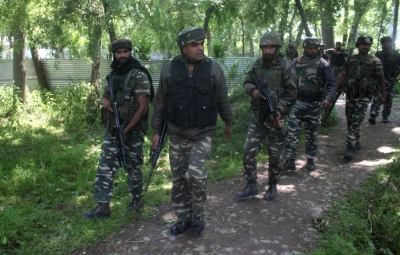
The Hizbul Mujahideen, previously seen as a local terror group in Jammu and Kashmir, has altered its approach. Despite being inactive post Indian security forces’ actions, the group has initiated a new recruitment campaign. Notably, there is a shift in recruitment dynamics, with more Pakistani fighters now joining compared to local Kashmiris.
A recent meeting on July 8 marked the death anniversary of Burhan Wani, a slain Hizbul Mujahideen commander. The outfit, based in Muzaffarabad in Pakistan-occupied Kashmir, deliberated on recruitment and strategic matters. Pressure from the Pakistani establishment has urged the group to regroup and resume activities in Jammu and Kashmir.
Following Operation Sindoor, the Hizbul Mujahideen has maintained a low profile. With the Jaish-e-Mohammed weakened, the focus on operations in Jammu and Kashmir now shifts to the Lashkar-e-Taiba and Hizbul Mujahideen. The Pakistani authorities are engaging the Lashkar-e-Taiba internally, while pushing the Hizbul Mujahideen to restart operations in Jammu and Kashmir.
Nearly 100 Hizbul Mujahideen militants are reportedly waiting in launch pads in Pakistan-occupied Kashmir to infiltrate Jammu and Kashmir. The group’s leadership has been instructed to enhance its propaganda efforts in the Valley. The outfit aims to recruit more Pakistani nationals and bolster its local presence by enlisting Kashmiri youth.
Officials emphasize the seriousness of Hizbul Mujahideen’s recent actions, focusing not only on recruitment and attacks but also on reigniting separatist sentiments in Jammu and Kashmir. The group’s strategy includes seeking individuals who can promote separatism in the region, a tactic deemed more concerning than direct terror activities.
The resurgence plan of Hizbul Mujahideen hinges on two main aspects: increasing recruitment from Pakistan and reviving separatist ideologies in the Valley. Despite facing setbacks in recent years, the group’s renewed efforts to revive militant operations in Jammu and Kashmir pose a significant concern.
