


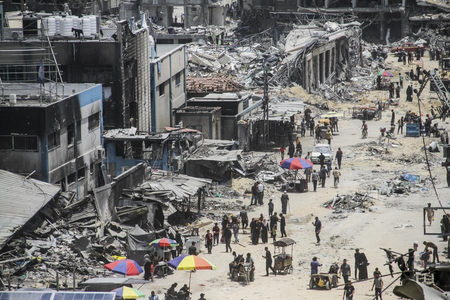
Humanitarians are concerned about the inadequate prosthetic and rehabilitation services for amputees in Gaza, as highlighted by the UN Office for the Coordination of Humanitarian Affairs (OCHA). OCHA revealed that over 6,600 individuals, with one in five being children, require prosthetic and rehabilitation care, with thousands of new amputations recorded since October 2023. Unfortunately, Gaza has only eight prosthetic technicians available to address this pressing need.
The OCHA emphasized the critical shortage of specialists and the restricted entry of prosthetic materials, estimating that meeting the current demand could take five years or more, assuming no additional amputations occur. International prosthetic technicians are urgently required, along with the expansion of workshop capacity and the unhindered entry of prosthetic materials, which are currently limited by Israeli authorities.
UN Emergency Relief Coordinator Tom Fletcher, in a recent post, acknowledged the ongoing efforts of the humanitarian community to assist Palestinians in Gaza. These efforts have been instrumental in saving lives, preventing famine, and restoring essential services, according to reports from the Xinhua news agency. However, Fletcher noted that more work is needed, particularly in ensuring sustained access, protecting civilians, maintaining neutrality, and fostering partnerships.
Fletcher highlighted that humanitarian partners of the UN have provided essential supplies, including tents, sealing-off materials, bedding, to nearly 4,500 households. Emergency shelters in Khan Younis have been improved using available materials like plastic sheets to offer immediate solutions to displaced families, with plans for upgrades once restricted materials are allowed entry. Concerns have also been raised by health partners regarding skin diseases and other medical issues associated with the presence of pests and rodents in the region.
