


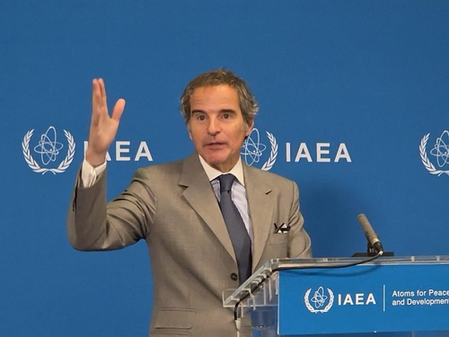
South Korea’s planned nuclear-powered submarine program is not expected to raise proliferation concerns, assured the International Atomic Energy Agency (IAEA) Director General, Rafael Grossi. Grossi mentioned that a robust safeguards arrangement with the IAEA will be established, with discussions already underway between Seoul and the agency. The technical process involves experts from both sides examining the requirements for the submarine program.
Grossi emphasized the necessity of a solid agreement with the IAEA to address any potential proliferation worries regarding Seoul’s proposed submarine initiative. He highlighted the challenge of ensuring accountability for nuclear material once loaded into submarines, especially considering their ability to operate underwater for extended periods without routine inspections. Discussions between South Korea and the IAEA are in the early stages, with specific decisions on technology and operational aspects yet to be finalized.
The envisioned submarines in South Korea’s program are planned to use low-enriched uranium for fuel, in contrast to the highly enriched uranium used in nuclear weapons. The government aims to launch the first nuclear-powered submarine by the mid-2030s and have it operational before 2040. Following agreements made in a summit with the US, joint efforts are underway to support Seoul’s submarine construction plans, including uranium enrichment and spent nuclear fuel reprocessing for civilian purposes.
