


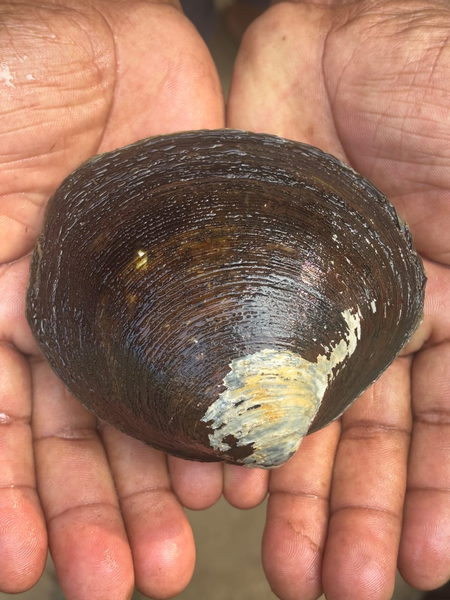
In a significant development, the ICAR–Central Marine Fisheries Research Institute (CMFRI) has successfully conducted induced breeding of the mangrove clam (Geloina erosa) in controlled conditions. This achievement is crucial for the conservation of this ecologically important but diminishing bivalve species found in mangrove and estuarine ecosystems in South and Southeast Asia. Known as mud clams, these species are highly valued as a local delicacy, especially in regions like northern Kerala, where they are popularly called ‘Kandal Kakka.’
The breakthrough involved inducing spawning in captive broodstock and completing the entire embryonic and larval development cycle under controlled settings. The successful settlement of spat from the 18th day post-spawning showcases the potential for viable seed production in a hatchery environment. This accomplishment is a rare documented instance globally of induced breeding, larval rearing, and spat production of the mangrove clam.
CMFRI scientists are now focused on standardizing larval rearing and nursery management practices to enhance survival rates and facilitate large-scale seed production. The development of hatchery technology, combined with grow-out farming in suitable estuarine systems, holds promise for sustainable and environmentally friendly aquaculture. Hatchery-produced seeds can be utilized for ranching in degraded mangrove ecosystems, aiding in clam stock enhancement and mangrove restoration efforts.
This breakthrough is anticipated to create new opportunities for sustainable livelihoods and nutritional security for communities dependent on mangroves, particularly along the Kerala coast. Farming initiatives based on hatchery-produced seeds could help replenish natural stocks, alleviate pressure on wild populations, and offer stable income sources for coastal households. The decline in wild mangrove clam stocks across India, exacerbated by various factors like overharvesting and habitat degradation, underscores the importance of such conservation efforts.
