


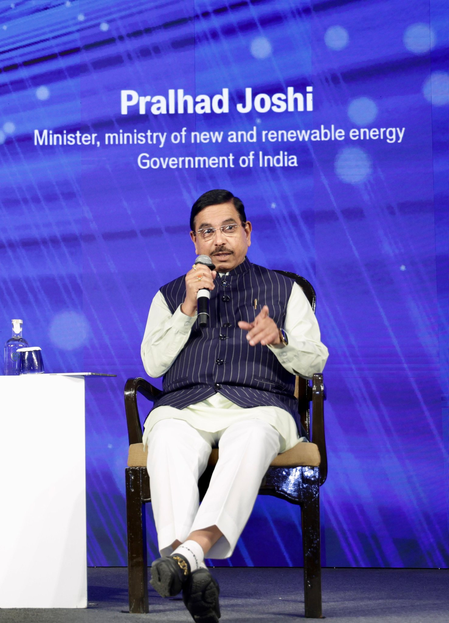
India is making significant strides in its clean energy transition, targeting 500 gigawatts (GW) of installed power capacity by 2030, according to Union Minister Pralhad Joshi. Joshi emphasized that the country has already achieved sourcing 50% of its electricity from non-fossil fuel sources ahead of schedule, showcasing the government’s ability to surpass its targets. Nearly 30% of India’s electricity now comes from renewable sources like wind, solar, battery storage, and pumped storage.
During peak demand periods, renewable energy has met almost two-thirds of India’s power requirement, indicating enhanced generation capacity and transmission efficiency. Joshi hailed this progress as a significant success story for India, noting the aggressive expansion of energy capacity and the country’s trajectory to achieve key milestones by 2027. The government plans to complete remaining work through a utility-led model to further bolster India’s energy landscape.
India has witnessed remarkable advancements in solar and green energy, with numerous large-scale projects underway to propel sectoral growth. Minister Joshi also highlighted India’s exceptional performance in wind energy, with a historic 6.1 GW capacity addition in 2025–26, positioning the country as the fourth-largest globally in wind energy. With over 56.1 GW of installed capacity and an additional 28 GW under implementation, India continues to solidify its position in the wind energy sector.
