


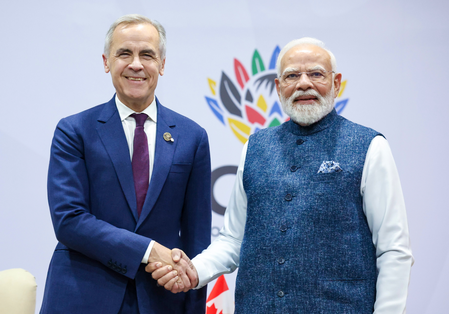
India and Canada, despite lacking geographical proximity or formal alliances, share economic complementarity and mutual global governance interests, fostering enduring ties. According to former diplomat Sanjay Kumar Verma, future relations between the two nations are expected to pivot towards investment flows, energy integration, supply chain partnerships, and enhanced people-to-people connections. Canadian Prime Minister Mark Carney’s upcoming visit to India is anticipated to mark a transition towards a more structured expansion phase in bilateral relations, emphasizing trade architecture, investment flows, and long-term energy integration.
Verma highlighted the significance of finalizing the Terms of Reference for a Comprehensive Economic Partnership Agreement as a crucial step in institutionalizing economic engagement between India and Canada. This move could lead to increased market access for Indian exports in pharmaceuticals, digital services, engineering goods, and refined petroleum products in Canada. Conversely, Canada aims to expand its market presence in India, particularly in energy resources, potash, pulses, timber, and advanced agricultural technology. The establishment of a structured trade framework has the potential to significantly boost bilateral trade volumes in the next decade, potentially doubling current levels by addressing tariff, regulatory, and mobility barriers.
In addition to trade, the visit is expected to shape a clearer economic, security, and strategic framework for the future partnership between India and Canada. The two countries are likely to deepen energy cooperation through structured hydrocarbon supply engagement and discussions on long-term uranium procurement to support India’s civil nuclear expansion and clean energy needs. Furthermore, supply chain synergies are poised to drive discussions on reciprocal market access in agriculture, energy, advanced manufacturing inputs, and services trade.
Verma also emphasized the anticipated expansion of industrial and technology collaboration between India and Canada, encompassing critical minerals processing, advanced materials, aerospace, digital technologies, and next-generation manufacturing ecosystems. The partnership is expected to focus on clean and green technology cooperation, including renewable energy integration, carbon management technologies, and emerging hydrogen value chains. Innovation ecosystems are set to witness growth through research collaboration, start-up partnerships, and enhanced skills mobility. The visit is not only aimed at advancing economic objectives but also at strengthening cooperation on security challenges, particularly in countering cross-border terrorism, including Khalistani networks and anti-India elements based in Canada, along with their financing and transnational support systems.
Moreover, the report underlines the anticipated collaboration on security challenges, emphasizing intelligence sharing, disrupting illicit financial flows, and joint actions against organized criminal and terror-linked supply chains. At the multilateral level, India and Canada are expected to reaffirm their commitment to reforming global governance institutions, including the United Nations system, to better align with contemporary geopolitical and economic realities, enhance counter-terror cooperation frameworks, and improve global development and security responses.
