


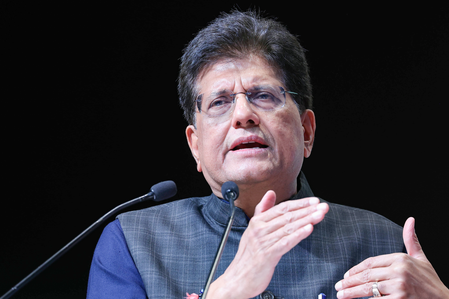
Commerce and Industry Minister Piyush Goyal criticized the India–South Korea free trade agreement, signed in 2009, for being unfavorable to India due to a significant rise in imports. To address this, negotiations to amend the India–Korea CEPA began in 2015, aiming for balanced trade growth. Subsequent ministerial meetings led to the launch of renegotiations, focusing on key sectors and reducing non-tariff barriers.
Efforts are underway to enhance the partnership between India and South Korea, prioritizing mutual benefits and addressing trade imbalances. The renegotiation talks are expected to conclude by 2026 or mid-2027, emphasizing reciprocity and shared interests. Steps have been taken to promote indigenization and reduce import dependency of Korean companies in India, leading to positive outcomes.
During the recent visit of the President of South Korea to India, a joint venture between JSW Steel and POSCO was announced to establish a greenfield integrated steel plant in Odisha. This signifies a shift towards joint ventures as opposed to wholly owned subsidiaries by Korean companies. Both nations have signed multiple MoUs to strengthen economic ties, focusing on various sectors like trade, industry, and clean energy, with an emphasis on enhancing supply chain resilience and industrial co-production.
The Indian government, under PM Modi’s leadership, aims to ensure fair trade, balanced outcomes, and boost domestic manufacturing while safeguarding national interests. This strategic approach is geared towards creating a mutually beneficial partnership between India and South Korea.
