


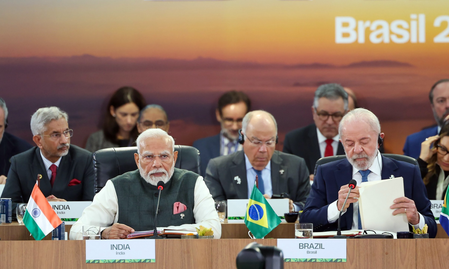
India, as the new head of BRICS, faces the challenge of navigating a shifting trade landscape amidst US-China tensions. With a focus on balancing economic and political interests within the bloc, India aims to promote a Global South agenda while managing geopolitical complexities. The BRICS group, now expanded to 11 members, plays a key role in fostering cooperation among emerging economies and advocating for a multipolar world order.
New Delhi’s presidency of BRICS in 2026 signifies its increasing role in global economic affairs. The group, comprising countries like Brazil, Russia, India, China, and South Africa, has emerged as a counterbalance to Western-dominated institutions. Through enhancing ties in various sectors, BRICS seeks to boost the influence of Global South nations in international governance and reform global institutions for better efficiency.
As the US undertakes actions like the recent operation in Venezuela, BRICS nations, including India, are presented with opportunities to address global governance issues. India’s cautious response to such incidents reflects the delicate balancing act it must perform while leading the bloc. Amidst challenges from the US, particularly regarding trade tariffs and currency issues, India’s presidency of BRICS will be closely monitored for its diplomatic and economic strategies.
