


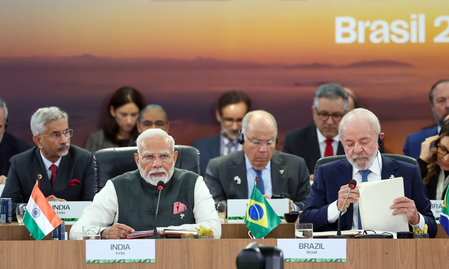
India has taken over the BRICS+ presidency for 2026, following Brazil’s presidency in 2025. The BRICS group now includes 10 nations, with India set to lead the association in 2026. India has already outlined its priorities for its upcoming presidency, focusing on enhancing cooperation and trust among member states.
During the BRICS Leaders meetings, various ministerial meetings are held in the nation holding the presidency. Prime Minister Narendra Modi has emphasized the importance of reforming global governance institutions within the BRICS framework. He envisions BRICS as a platform for cooperation, innovation, and sustainability, with a people-centric approach.
PM Modi aims to redefine BRICS as “Building Resilience and Innovation for Cooperation and Sustainability” during India’s presidency. He advocates for a “humanity first” approach, urging joint efforts to tackle common challenges like pandemics and climate change. The BRICS association aims to promote cooperation in various areas, including politics, economic development, education, and scientific research.
India’s leadership in BRICS signifies a shift towards a more multipolar world order, challenging Western dominance. The association has seen significant growth and transformation, with a focus on economic and political cooperation among member countries. The expansion of BRICS+ and the inclusion of partner countries reflect a growing global influence, with projections indicating a substantial economic impact in the coming years.
