


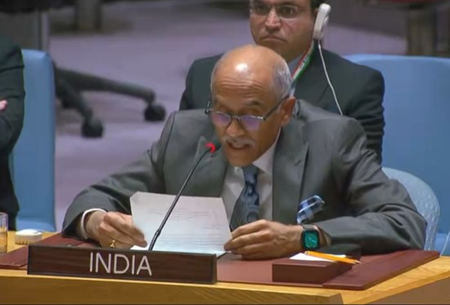
India strongly criticized Pakistan for conducting air attacks on Afghanistan during Ramadan, labeling it as hypocritical behavior. The attacks, which took place in March 2026, resulted in the deaths of 185 innocent civilians, with a majority being women and children. India’s Permanent Representative to the UN, P Harish, denounced these airstrikes as clear violations of international law and the UN Charter, emphasizing the importance of respecting state sovereignty.
Harish, speaking at a Security Council briefing on Afghanistan, did not directly name Pakistan but made pointed remarks against the country’s actions. He highlighted that while Pakistan justified its attacks by accusing Afghanistan of harboring terrorists, it was, in fact, using terrorist groups as proxies to target its neighbors. The international community, he stressed, must unite to combat terrorism and prevent groups like ISIL, Al Qaida, Lashkar-e-Tayyiba, Jaish-e-Mohammed, and their affiliates from engaging in cross-border terrorism.
The recent terrorist attack at Pahalgam, carried out by The Resistance Front, resulted in the deaths of 26 individuals. Georgette Gagnon, Deputy Special Representative for Afghanistan under Secretary-General Antonio Guterres, highlighted the severe human and economic toll of the conflict with Pakistan. With Pakistan closing its border with Afghanistan, trade routes through Iran have been disrupted, leading to a rise in the prices of essential goods and further straining Afghanistan’s fragile economy. Instability along Afghanistan’s borders with both Pakistan and Iran poses a significant threat to the country’s stability.
