


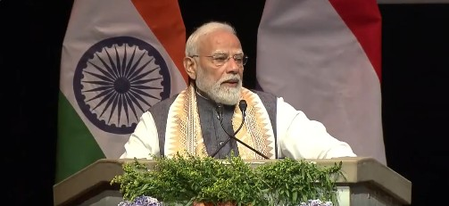
Twelve years ago on May 16, 2014, India elected the National Democratic Alliance (NDA) led by the Bharatiya Janata Party (BJP) under Prime Minister Narendra Modi. This marked a shift from alleged corruption and coalition issues during the previous regime. Prime Minister Modi reflected on the significance of that day during a recent address in the Netherlands.
Narendra Modi’s tenure as the 14th Prime Minister of India has been characterized by structural reforms and a prominent global presence. His leadership focused on financial inclusion, modernizing the economy, and promoting collective development. Initiatives like the Pradhan Mantri Jan Dhan Yojana and Digital India aimed at expanding financial access and digital connectivity.
Under Modi’s governance, India witnessed the implementation of key reforms such as the Goods and Services Tax (GST) and initiatives like ‘Startup India’ and ‘Make in India’. Social welfare programs like Ayushman Bharat and tax relief measures were introduced to support the poor and middle class. The government also emphasized national security and governance efficiency, along with a proactive stance against terrorism.
India’s diplomacy under Modi has been multipolar, strengthening global partnerships and enhancing the country’s image as a rising global power. The government’s efforts have also focused on empowering various sections of society, including youth, women, and farmers. Modi’s leadership has expanded the BJP’s influence beyond traditional strongholds, emphasizing a national presence.
