


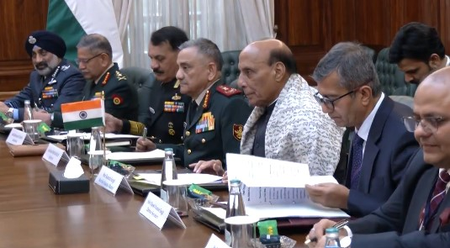
India is making progress towards finalizing a significant defence and trade alliance with the European Union, following discussions between a high-level EU delegation and Defence Minister Rajnath Singh in New Delhi. The meeting, held at Singh’s office, is part of broader negotiations aimed at strengthening strategic, economic, and security relations between India and the EU.
The talks coincide with the visit of European Commission President Ursula von der Leyen, who arrived in India on January 24. She is expected to meet Prime Minister Narendra Modi at the 16th India–EU Summit, along with European Council President Antonio Costa.
During the summit, officials are anticipated to announce the completion of negotiations on the long-awaited India–EU Free Trade Agreement (FTA), described as the “mother of all trade deals.” Commerce Secretary Rajesh Agrawal confirmed the successful conclusion of FTA negotiations, emphasizing its balanced and forward-looking nature, which is poised to enhance trade, investment flows, and economic integration between the two parties.
Bilateral goods trade between India and the EU is valued at $136 billion in 2024–25, with the EU being India’s largest trading partner. The EU accounts for nearly 17% of India’s total exports, while Indian exports make up about 9% of the EU’s overseas shipments.
Although negotiations have been finalized, the FTA will come into effect next year after the text undergoes legal scrutiny for the next five to six months, followed by formal signing, ratification by the European Parliament, and approval by the Indian Cabinet.
The India–EU Summit will also emphasize cooperation in areas such as defence, security, clean energy transition, digital technologies, and people-to-people ties. The ongoing defence discussions with Rajnath Singh are viewed as part of a broader initiative to bolster the India–EU strategic partnership.
The India-EU FTA is considered a significant move in expanding India’s global trade presence, potentially mitigating the impact of high US tariffs by creating more opportunities in the European market, particularly for Indian exports like textiles and jewellery.
One key outcome of the agreement is the opening up of India’s automobile sector to European car manufacturers, with import duties on European vehicles expected to decrease from 110% to around 40%, making cars from companies like Volkswagen, Mercedes-Benz, and BMW more accessible in the Indian market.
