


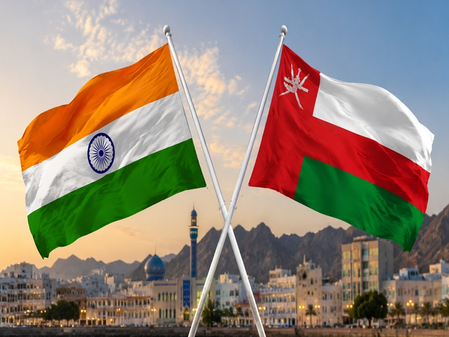
The India–Oman Comprehensive Economic Partnership Agreement (CEPA) has recently taken effect, offering significant market access opportunities for India’s textiles and apparel sector in the Gulf region. Oman has granted immediate duty-free access on nearly 1,000 textile and apparel tariff lines, eliminating previous tariffs and enhancing the competitiveness of Indian products in Oman. Additionally, zero duty access has been extended to handicraft exports as well.
India’s exports of textiles, apparel, and handicrafts to Oman totaled USD 95.1 million in the fiscal year 2025–26, while Oman imports textiles and apparel worth around USD 598 million annually. India, being the third-largest supplier of Oman’s imports, stands to benefit from the CEPA by expanding exports and capturing a larger market share. The agreement presents a favorable opportunity for Indian exporters to meet the growing demand in Oman, particularly in segments like apparel, carpets, and fabrics.
The CEPA includes a modern digital Certificate of Origin (CoO) framework, enabling seamless electronic exchange of origin certificates between India and Oman. This digitalization aims to reduce transaction costs, enhance efficiency, and facilitate smoother trade flows between the two countries. Moreover, the agreement focuses on strengthening cooperation in intellectual property rights, ensuring national treatment in the protection of IPR and recognizing Geographical Indications (GIs) to boost the marketability of India’s GI-tagged handloom and handicraft products in Oman.
The implementation of the India–Oman CEPA is anticipated to elevate bilateral trade, foster supply-chain connections, and open up new avenues for Indian exporters, artisans, and MSMEs. By offering comprehensive duty-free access and a transparent trade framework, the agreement is poised to accelerate India’s textile exports to Oman, solidifying its position as a competitive and dependable supplier in the global market. Additionally, amidst evolving geopolitical dynamics in West Asia, Oman’s strategic location as a trade gateway to the Gulf Cooperation Council (GCC) nations is expected to further enhance trade connectivity in the region.
