


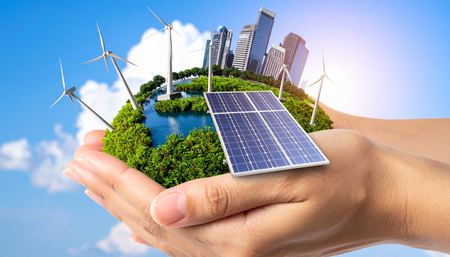
India is making significant strides towards achieving its goal of 500 GW of non-fossil fuel energy capacity by 2030, as stated by New and Renewable Energy Minister Pralhad Joshi. The country’s non-fossil fuel capacity has surged from 81 GW in 2014 to 288 GW presently, marking a growth of over 256 percent. Specifically, solar energy capacity has escalated from 2.8 GW to 155 GW, while wind energy capacity has increased from 21 GW to 56.4 GW.
To reach the next phase successfully, deeper integration of generation, storage, and transmission systems will be necessary, along with bolstering grid resilience, according to the minister. He emphasized the critical need for continued collaboration between the government and industry to maintain the growth momentum. Despite a global decline in renewable energy investments, India has continued to attract substantial investment, showcasing increasing global confidence in its clean energy path.
Joshi highlighted the pivotal role of public-private partnerships in driving India’s renewable energy expansion, acknowledging the contributions of industry stakeholders. He stressed the importance of a strong commitment between the government and industry as the country aims to develop a globally competitive and technologically advanced energy system. The minister invited industry stakeholders and global investors to engage in the upcoming Renewable Energy Global Investors Meet later this year.
Renewable energy is becoming a key factor in enhancing competitiveness across various industrial sectors such as steel, aluminum, chemicals, automotive, and textiles, noted Joshi. He underlined the significance of emerging areas like green hydrogen, battery storage, pumped hydro, offshore wind, and round-the-clock renewable energy solutions in the upcoming growth phase. India’s focus on scale, speed, skill, and self-reliance is expected to not only meet its clean energy targets but also establish itself as a global model for sustainable industrial transformation.
