


India has restated its travel advisory for Iran, advising its nationals to refrain from traveling to the region and urging those already there to leave using any available means. The Indian Embassy in Iran emphasized the need for Indian nationals to avoid travel to Iran in light of the current situation. It also advised Indian citizens present in Iran to depart the country through accessible transportation options.
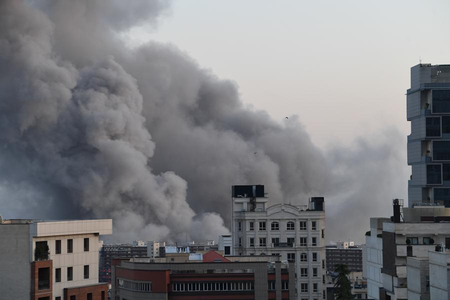
Tensions in West Asia have been escalating, with recent incidents involving exchanges between Iran and Israel. The Israel Defence Forces (IDF) reported targeting multiple sites at Iran’s Mahshahr petrochemical complex. Additionally, the IDF intercepted all Iranian missiles launched towards Israel, with one impact in the West Bank likely being a large fragment post-interception.
Iran’s Khatam al-Anbiya Central Headquarters commander, Ali Abdollahi, warned of severe consequences if Israel continues its attacks on southern Lebanon and the Dahieh district. He emphasized that Israel must cease its actions in southern Lebanon and Dahieh to avoid facing retaliatory measures. Abdollahi accused Israel of escalating its attacks on southern Lebanon and Dahieh, crossing established boundaries.
The ongoing tensions in West Asia originated from US-Israeli strikes on Iran on February 28, resulting in casualties including Iran’s Supreme Leader and top military officials. Subsequently, Iran retaliated with drone and missile attacks on US and Israeli facilities, regional capitals, and allied forces in West Asia. A ceasefire among Iran, the United States, and Israel was implemented on April 8, with recent peace proposals exchanged between the parties to formalize an end to the conflict.
