


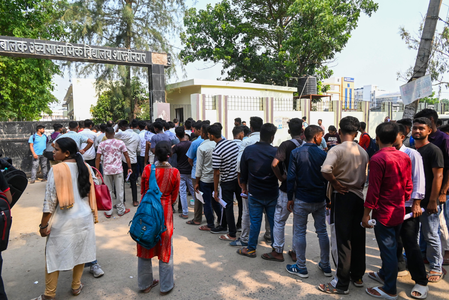
Examination paper scams have long plagued India’s education and recruitment systems, eroding public trust and leaving students in uncertainty. Despite government efforts to address the issue, convictions have been rare, and trials have dragged on for years.
State-level recruitment exams have faced leaks due to a network involving officials, politicians, and middlemen manipulating exam papers and results. The West Bengal teacher-recruitment scam, a significant corruption scandal, highlighted the sale of teaching positions in government schools for money instead of merit.
The scam, dating back to the Trinamool Congress government’s tenure between 2014 and 2016, saw unqualified candidates allegedly appointed in exchange for bribes. Thousands of appointments were canceled after investigations revealed massive irregularities, impacting the education system and leaving schools understaffed.
The Vyapam scam in Madhya Pradesh, one of India’s largest scandals, exposed widespread corruption in entrance and recruitment exams. This scandal, involving bribery, cheating, and mysterious deaths, underscored systemic corruption in education and recruitment processes.
The National Eligibility-cum-Entrance Test (NEET) and the University Grants Commission’s National Eligibility Test (UGC-NET) have also faced allegations of leaks, affecting medical and higher education admissions. The government’s introduction of the Public Examinations (Prevention of Unfair Means) Act, 2024, aimed to combat organized exam fraud but enforcement challenges persist.
To address paper leaks, Prime Minister Narendra Modi has announced the establishment of fast-track courts dedicated to handling such cases. These courts, under the jurisdiction of high courts in Bombay, Calcutta, Delhi, and Madhya Pradesh, aim to expedite justice delivery and tackle the issue of delayed trials.
