


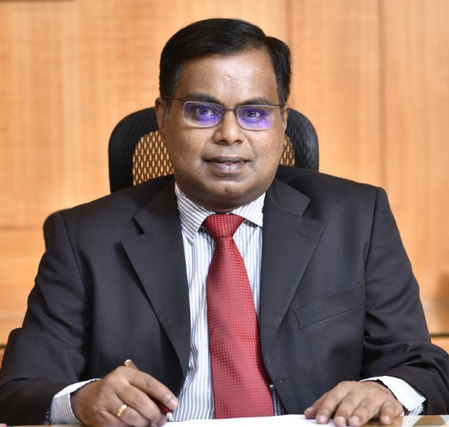
The India-UK Free Trade Agreement (FTA) is hailed as a historic pact that will enhance exports, elevate the competitiveness of Indian industries, and foster stronger economic bonds between the two nations. NABARD Chairman Dr. Shaji Krishnan V expressed that this agreement signifies a significant advancement for both countries, offering zero-duty access for various Indian products and reducing tariffs on others.
Dr. Shaji Krishnan V emphasized that the FTA will play a crucial role in amplifying India’s exports by granting zero-duty access to numerous products and cutting tariffs on others. This comprehensive agreement encompasses trade, investment, services, and technology, paving the way for greater market access and increased economic openness, which will empower Indian industries to expand globally, boost competitiveness, and augment business turnover.
According to Dr. Shaji Krishnan V, the key focus moving forward is to create a robust enabling environment domestically to fully capitalize on the advantages of this significant deal. NABARD’s evolving role was highlighted by the chairman, noting its transition from a traditional credit and rural liquidity focus to a major financier of rural infrastructure and a facilitator of investment across the rural economy.
Shaji Krishnan V mentioned that NABARD is actively engaged in mapping agricultural value chains to ensure sustainable livelihood creation through investments in production, processing, marketing, and distribution. The institution is also collaborating closely with Farmer Producer Organisations (FPOs) and cooperative institutions to bolster their capacity and involvement in the rural economy, with initiatives such as computerizing primary cooperative societies to enhance transparency, traceability, and operational efficiency.
Moreover, institutional reforms and capacity-building endeavors are reshaping NABARD into an institution builder and a driver for sustainable rural development. Addressing the impact of trade agreements on agriculture, the NABARD Chairman highlighted Prime Minister Narendra Modi’s commitment to safeguarding the interests of small farmers, artisans, and rural producers during trade negotiations, emphasizing the dual purpose of these agreements in supporting livelihoods alongside market economics.
