


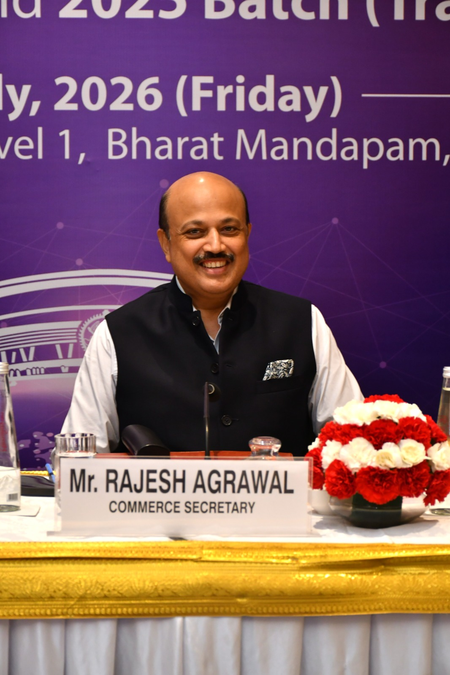
The India-UK Comprehensive Economic and Trade Agreement (CETA) has been hailed as a significant and forward-looking trade deal by Commerce Secretary Rajesh Agarwal. Agarwal emphasized that the agreement, uniting two substantial and complementary economies, is set to bring substantial advantages to labor-intensive industries and agriculture in India.
Agarwal noted that the CETA stands out as a comprehensive and ambitious trade pact, offering a platform for enhanced economic collaboration between the two nations. He highlighted the expected positive impact on labor-intensive sectors and agriculture, foreseeing new prospects for Indian exporters.
The swift implementation of the agreement was underscored by Agarwal, who pointed out that typically trade agreements take a long time to come into effect. However, the India-UK CETA was operationalized within a year of negotiations and signing, showcasing the efficiency of the process.
British High Commissioner to India Lindy Cameron expressed satisfaction at the activation of the agreement, labeling it a significant milestone in the bilateral relationship. Cameron emphasized that the trade deal will streamline day-to-day trade between India and the UK, making it more cost-effective, efficient, and seamless.
Cameron highlighted the broad benefits across various sectors that the trade agreement brings, noting that a vast majority of goods from both countries will now enter each other’s markets either duty-free or with reduced tariffs. This move is expected to enhance the economic ties between India and the UK, which already have a substantial trading partnership valued at approximately £48 billion.
