


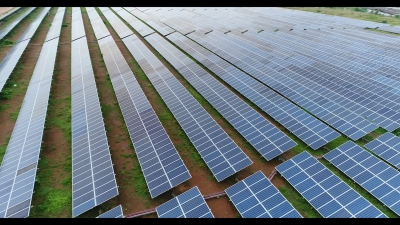
India is advised to go beyond just increasing solar capacity and adopt distributed solar, storage, and smarter grids to cater to the expected rise in energy demand, as per a Tata Power report. By 2035, solar energy is projected to be crucial for India’s competitiveness, fueling industries, empowering communities, shaping smart cities, and generating numerous jobs. The report highlights that India is set to experience the largest surge in energy demand globally in the upcoming years, with microgrids potentially becoming essential for rural manufacturing clusters, digital education, modern healthcare facilities, and community-level electric mobility.
Distributed solar energy is seen as a means to expand clean energy accessibility beyond major urban centers, necessitating supportive policy frameworks for rapid deployment, intelligent grid systems, and sustained investment confidence. Dr. Praveer Sinha, CEO of Tata Power, emphasized the significance of affordable and accessible clean energy to meet the escalating energy requirements in India. Tata Power outlined six key policy recommendations, including resource adequacy frameworks, storage procurement mandates, incentives for domestic manufacturing, and green open access with digital approval processes.
The report also stresses the importance of integrating firm, dispatchable energy sources alongside renewables to ensure grid reliability as solar energy adoption rises. Encouraging utilities and developers to incorporate battery and pumped-hydro storage solutions is anticipated to enhance grid stability, reduce energy wastage, and support continuous renewable energy supply. Collaboration in research and development for advanced solar modules and emerging technologies, workforce training, manufacturing innovation, and grid modernization efforts are highlighted as critical areas requiring collective action.
India currently ranks third globally in solar capacity and fourth in overall renewable energy deployment, having added 26.6 GW of solar power in the first nine months of 2025, marking a 54% increase year-on-year.
