


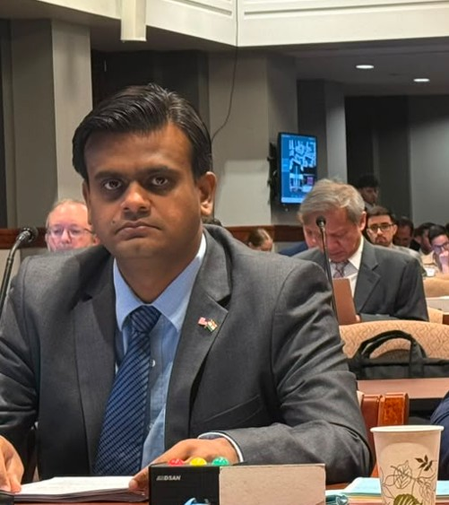
India has urged the United States to focus on cooperation rather than punitive tariffs in addressing forced labor issues. Shuchita Sonalika, representing the Confederation of Indian Industry (CII), emphasized the importance of strengthening compliance mechanisms over imposing blanket duties on Indian exports. Sonalika highlighted that collaborative efforts to enhance labor standards would be more effective than trade restrictions proposed in the Section 301 investigation.
Responding to queries from USTR officials, Sonalika stressed that exempting Indian products from additional duties could incentivize countries under investigation to eradicate unfair labor practices. She advocated for compliance and cooperation-based mechanisms as more effective than applying tariffs. Sonalika mentioned that CII has been collaborating with the International Labour Organisation (ILO) and the United Nations Development Programme (UNDP) to promote responsible business practices.
According to Sonalika, Indian companies have implemented internal safeguards to prevent forced labor in their supply chains. She cited various measures such as codes of conduct, ethics policies, and ESG frameworks that Indian companies voluntarily adhere to. Sonalika also mentioned India’s Business Responsibility and Sustainability Reporting (BRSR) framework, which mandates disclosures by the top 1,000 listed companies in the country.
Sonalika reiterated India’s commitment to eliminating forced labor from global supply chains. She argued against the proposed 12.5% additional tariff, stating it would penalize a compliant industry without advancing the policy goal. Sonalika emphasized that India already has a robust legal framework prohibiting forced labor, including constitutional protections and adherence to core conventions of the International Labour Organisation.
India’s inputs are deeply integrated into U.S. manufacturing supply chains, Sonalika pointed out, cautioning that a 12.5% tariff would escalate costs for American manufacturers and disrupt established sourcing relationships. She urged the USTR to refrain from imposing tariffs and non-tariff measures on Indian industries, advocating for strengthened engagement through existing bilateral mechanisms like the India-U.S. Trade Policy Forum.
