


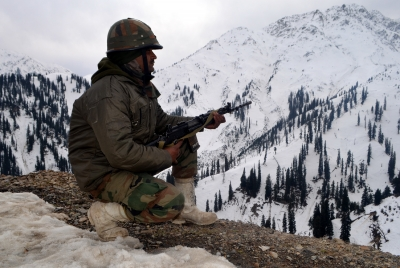
For the past week, the Indian Army has been engaged in a significant operation targeting 30-35 terrorists in Jammu and Kashmir. This operation is particularly challenging due to the harsh winter conditions during the Chillai Kalan phase. Security forces are expecting better progress after January 31 when the weather is expected to be more favorable.
The terrorists, belonging to Jaish-e-Mohammad, have altered their usual tactics by remaining active despite the adverse weather conditions. They have also isolated themselves at higher altitudes, a departure from their typical behavior of seeking shelter with locals. Following a recent attack in Pahalgam, locals have refused to support the terrorists, forcing them to operate independently.
Intelligence reports suggest that the terrorists’ decision to operate at high altitudes poses risks to their logistics and health. Despite the limitations, they are willing to take the chance to carry out low-scale attacks. The Indian armed forces’ Operation Sindoor has significantly disrupted terrorist activities, leading to a decrease in infiltrations from Pakistan.
The terrorists, facing a decline in recruits, are attempting smaller attacks to boost morale and attract new members. They are minimizing communication to avoid detection and operating in smaller groups to prevent total elimination. The security forces have heightened their vigilance and adapted strategies to counter these evolving tactics, including maintaining operations throughout the winter and establishing snowbound bases.
Union Home Minister Amit Shah has warned of increased terrorist activities during snowfall, prompting heightened alertness among security forces. Despite challenges, including the presence of launch pads in Pakistan-occupied Kashmir, infiltration attempts have been thwarted due to stringent security measures and constant monitoring.
