


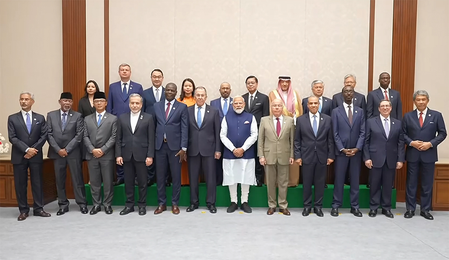
As global tensions rise, Indian diplomacy encountered complexities while leading key multilateral forums like the G20 in 2023 and the BRICS Foreign Ministers’ Meeting in 2026.
The BRICS Foreign Ministers’ Meeting in New Delhi showcased divergent opinions within the bloc, notably between Iran and the UAE, amidst the US-Israeli conflict with Iran. Anil Trigunayat, a former Indian diplomat, highlighted the need for consensus to avert greater challenges for BRICS amid the ongoing hostilities in the West Asian region.
Emphasizing dialogue and diplomacy, Trigunayat noted India’s preference for de-escalation to ease tensions. Prime Minister Narendra Modi and External Affairs Minister S. Jaishankar engaged extensively with regional counterparts to mitigate tensions while safeguarding India’s diaspora in West Asia.
India’s BRICS presidency theme, ‘Building for Resilience, Innovation, Cooperation, and Sustainability,’ signifies the platform’s evolving direction in a fractured global order. Despite its geo-economic focus, BRICS faces geopolitical influences, with India advocating for a ‘non-Western’ stance without being ‘anti-Western.’
Under India’s leadership, the BRICS Summit in September aims to address a wide agenda encompassing economic cooperation, counter-terrorism, climate action, trade, technology, connectivity, people-to-people exchanges, and sustainable development. Trigunayat anticipates proactive initiatives to enhance security, prosperity, and equitable development across the Global South.
