


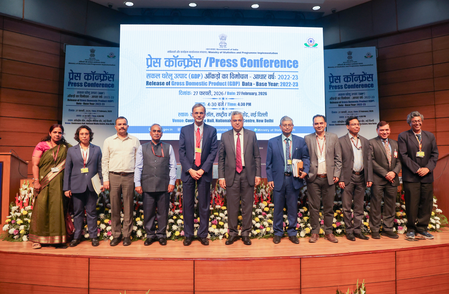
The Indian economy is anticipated to achieve a 7.6% growth in the fiscal year 2025–26, as per an official statement. This growth signifies a robust and consistent expansion, aligning with the vision of ‘Viksit Bharat’ for enhanced productivity and inclusive development. The revision of the GDP base year to 2022–23 is a significant move towards adapting India’s national accounts to the evolving economic landscape.
The updated GDP series integrates enhanced data sources, methodological frameworks, and broader coverage of emerging sectors, ensuring a more precise and comprehensive measure of economic activity. This transition towards higher standards of precision and global alignment enhances the credibility of official statistics, supporting informed policymaking and sustainable economic strategies. India follows the 2008 System of National Accounts (SNA 2008) for compiling its GDP estimates, maintaining international statistical standards.
India is progressing towards aligning with the SNA 2025, expected to be globally adopted by around 2029–30, in its next base year revision. As a subscriber to the IMF’s Special Data Dissemination Standard (SDDS), India upholds globally recognized benchmarks of statistical quality and transparency. The ongoing modernization of India’s statistical system includes the revision of the base year for GDP estimates, CPI, IIP, and the upcoming revision of the WPI.
The Ministry of Statistics and Programme Implementation (MoSPI) plans to introduce the Producer Price Index (PPI) shortly, measuring the price changes of goods and services traded by producers. The WPI base year revision is underway, with the existing WPI to be used as a deflator until the updated version is available. These initiatives aim to further enhance the accuracy and relevance of India’s statistical data for economic planning and decision-making.
