


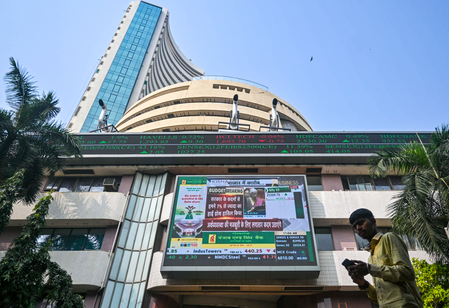
The Indian equity markets started the day significantly down on Friday, influenced by the impact of rising crude oil prices due to the US-Iran conflict. By 9:25 am, Sensex had dropped by 516 points, reaching 75,517, while Nifty was down by 174 points, hitting 23,464. Main broad-cap indices mirrored this trend, with Nifty Midcap 100 declining by 0.84% and Nifty Smallcap 100 losing 1.08%.
All sectoral indices, except Nifty FMCG which saw a 0.41% gain, were in the red. Nifty metal faced the most significant losses, dropping by 1.84%, while Nifty IT and media sectors were also among the top losers, down by 1.18% and 1.17%, respectively. Analysts noted that the near-term resistance for Nifty is around 23,800, with support at the 23,600 level.
Iran’s new Supreme Leader Mojtaba Khamenei emphasized the closure of the Strait of Hormuz and the possibility of opening new war fronts if the conflict persists. Despite the geopolitical tensions affecting oil prices and financial markets, analysts reassured that India is not immediately at risk of fuel shortages. The main concern for the markets currently lies in the potential impact of higher oil prices on inflation, the rupee, and corporate costs, rather than fuel availability disruptions.
India’s energy security is robust, with approximately 25 days of crude oil reserves, 25 days of refined fuel stocks, and strategic petroleum reserves, providing a total supply cushion of 50–60 days even without fresh imports. In other Asian markets, China’s Shanghai and Shenzhen dipped, Japan’s Nikkei fell, and Hong Kong’s Hang Seng Index also experienced losses. The US markets closed deeply in the red, with Nasdaq, S&P 500, and Dow Jones all declining.
Foreign institutional investors (FIIs) in India net sold equities worth Rs 7,049 crore on March 12, while domestic institutional investors (DIIs) were net buyers of equities worth Rs 7,449 crore.
