


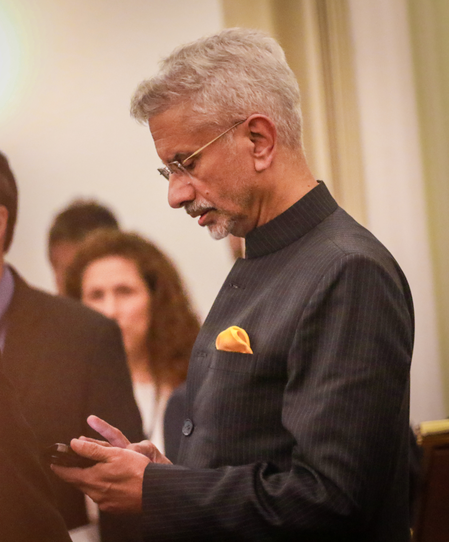
Indian External Affairs Minister S Jaishankar engaged in consecutive phone discussions with the Foreign Ministers of Iran and Israel on Saturday, expressing India’s deep apprehension regarding the escalating situation in the Middle East. The talks followed a significant joint US-Israel strike on Iran and subsequent retaliatory actions by Tehran. Jaishankar emphasized the importance of preventing further instability in the region during these conversations.
In his dialogue with Iranian Foreign Minister Seyed Abbas Araghchi, Jaishankar conveyed India’s profound concerns about the recent developments in Iran and the broader Middle East. He stressed the necessity of averting prolonged conflict to maintain regional peace and global stability. Furthermore, Jaishankar reiterated India’s stance on advocating dialogue and diplomacy to de-escalate tensions during his conversation with Israeli Foreign Minister Gideon Sa’ar.
India has consistently promoted restraint, respect for the sovereignty of all states, and the avoidance of actions that could lead to civilian endangerment. The Ministry of External Affairs echoed these sentiments, expressing deep worry over the rapidly evolving events in the region. It urged all parties involved to prioritize dialogue over military confrontation to address the escalating situation effectively.
The recent strikes, labeled as “Operation Epic Fury” by the US and described as pre-emptive by Israel, targeted Iranian military and leadership installations. This led to retaliatory measures, including missile attacks on US-affiliated facilities across various nations. The escalation has raised concerns about the possibility of a broader conflict, with international organizations like the Red Cross cautioning against a dangerous chain reaction.
India’s proactive diplomatic engagements underscore its balanced approach in West Asia, navigating its strong ties with Israel alongside its historical relations with Iran. New Delhi continues to closely monitor the unfolding events, advocating for immediate restraint to safeguard regional stability and protect Indian interests.
