


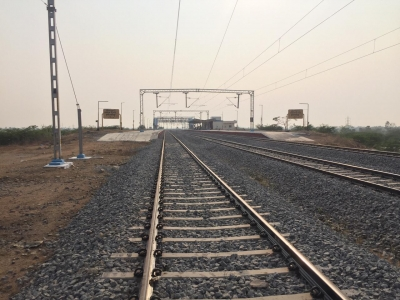
Indian Railways has successfully electrified 99.6% of its broad gauge network, operating around 25,000 trains daily and serving 741 crore passengers in 2025–26. The total revenue for 2025–26 stood at approximately Rs 80,000 crore, with freight movement reaching a record 1,670 million tonnes (MT) during this period.
By 2014, only about 20% of India’s railway network was electrified, leading to operational inefficiencies due to heavy reliance on diesel fuel. However, as of March 2026, a significant improvement has been made with 69,873 route kilometres (rkm) being electrified, up from 21,801 rkm in 2014. Railway electrification efforts in 2024–25 alone saved about 180 crore litres of diesel, resulting in savings of around Rs 6,000 crore and reducing crude oil imports.
India’s current electrification levels surpass those of the UK (39%), Russia (52%), and China (82%). Notably, the Kavach Automatic Train Protection System has been installed over 3,100 route kilometres, with plans for implementation on an additional 24,400 kilometres. The Video Surveillance System (VSS) has also been expanded to 1,874 railway stations, utilizing AI-based analytics and facial recognition technology to enhance passenger safety and monitoring.
Moreover, the Integrated Passenger Information System (IPIS) has been rolled out at 1,405 stations, integrated with the National Train Enquiry System (NTES) to ensure timely announcements and improve passenger communication. The statement highlighted strategic strengthening of track infrastructure over the past decade, with 54,600 kilometres of railway tracks renewed during 2014–26, enhancing reliability and operational performance.
The track length capable of supporting speeds above 110 kmph has significantly increased from 31,445 km to over 85,000 km, facilitating faster and more efficient operations. The Vande Bharat Sleeper service, launched in January 2026, carried 1.21 lakh passengers across 119 trips in its initial three months of operation. Additionally, approximately 3.98 crore passengers utilized the Vande Bharat Express network in FY 2025–26, indicating substantial growth in passenger usage.
To cater to low- and middle-income families, Indian Railways introduced the Amrit Bharat Express, offering fully non-AC modern trains for improved comfort and safety at affordable rates. As of March 18, 2026, 60 Amrit Bharat Express services are operational across the Indian Railways network.
