


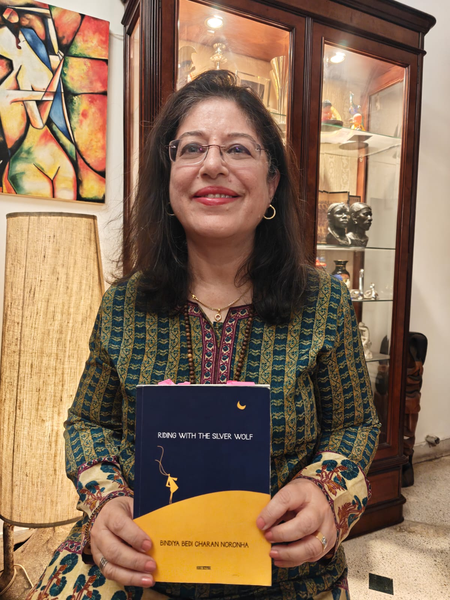
An Indian teacher of Portuguese in New Delhi, Dr. Bindiya Bedi Charan Noronha, has launched her second poetry book titled “Riding With The Silver Wolf.” The book, released on Portugal’s National Day, covers themes ranging from social injustice to ecology, urging readers to introspect for answers. Noronha’s work, inspired by Rabindranath Tagore and Luis de Camoes, aims to provoke questions rather than offer solutions.
Noronha’s book, described as a “journey on the waves,” intertwines various themes such as spirituality, feminine identity, ecological consciousness, and social justice. The author emphasizes that the book is a reflection of diverse aspects of life rather than a singular central theme.
The connection between India and Portugal is deeply embedded in Noronha’s book, influenced by her experiences studying in Portugal under a cultural agreement. Having been inspired by both Tagore and Camoes, Noronha highlights the cultural significance of these literary figures in shaping her work. Portugal’s National Day, commemorating Camoes’ death, holds special importance for Noronha, bridging the cultural ties between the two nations.
Noronha’s book encourages readers to delve into introspection, emphasizing the importance of courage, responsibility, and freedom. It prompts individuals to contemplate social injustices, ecological concerns, and the essence of spiritual and cultural heritage. The author stresses the need for responsible exercise of freedom in a democratic society like India.
The book, with its inclusive themes and introspective approach, targets a wide audience, transcending age and background barriers. Noronha’s poetry group, India’s Stanza, exemplifies the book’s universal appeal, catering to poets ranging from 13 to 72 years old. The work aims to guide readers on a journey of self-discovery, healing, and fostering a deeper love for the world.
Noronha envisions her book to have a profound cultural impact, blending influences from her Indian roots and her engagement with Portuguese language and culture. The foreword by Maria Regina da Mota and the book launch by the Portuguese Ambassador underscore the cultural significance and reach of Noronha’s literary endeavor.
