


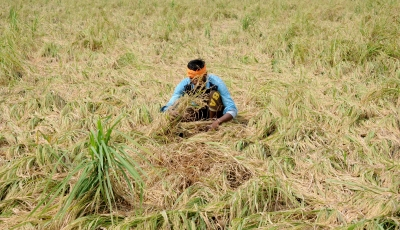
India is focusing on transitioning to a circular economy in agriculture to convert waste into valuable resources. The country’s annual agricultural residues, amounting to 350 million tonnes, have the potential to generate over 18,000 MW of power each year. Additionally, these residues can be utilized to produce organic fertilizers that enrich soil health and reduce reliance on chemical inputs in farming.
The government’s Crop Residue Management Initiatives have allocated Rs 3,926 crore in support between 2018-19 and 2025-26. Moreover, more than 42,000 Custom Hiring Centres have been established, along with the deployment of 3.24 lakh machines to promote sustainable residue management. Flagship programs like GOBARdhan have led to the operation of 979 biogas plants across 51.4% of districts, converting dung, crop residues, and food waste into clean energy and organic manure.
Globally, around 1.3 billion tonnes of food produced for human consumption are wasted annually, with a significant portion of biodegradable municipal solid waste originating from household kitchens. Inadequate management of organic waste, including food waste and agricultural residues, leads to methane and greenhouse gas emissions in landfills, contributing to pollution and environmental degradation. This underscores the importance of adopting a ‘waste-to-wealth’ approach, emphasizing resource recovery and reuse to enhance resource efficiency and address environmental concerns.
The circular economy model is highlighted as a comprehensive and scalable approach to improving resource efficiency throughout product and process lifecycles. By implementing proven strategies, reinforcing local institutions, and aligning economic incentives with ecological goals, circular agriculture can significantly contribute to long-term food security, climate resilience, and inclusive rural development. This transformation aims to make agricultural waste a cornerstone of sustainable prosperity.
