


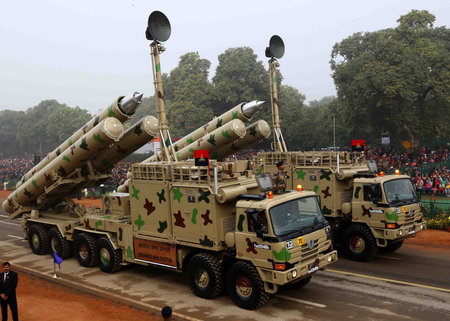
India’s progress in becoming a significant arms exporter is highlighted by the BrahMos missile, showcasing its growing defense capabilities. With a focus on enhancing missile production expertise and expanding global outreach, particularly in the Global South, India is reinforcing its “Defence Atmanirbharta” and elevating its global standing. Defense exports have become a crucial tool for India’s foreign policy, aiming to establish itself as a major player globally and strengthen diplomatic ties and partnerships.
Defense Minister Rajnath Singh has expressed confidence that India’s defense exports will reach 50,000 crore rupees by 2030. India is looking to extend its influence in regions aligning with its strategic interests, with a particular focus on the Global South. The BrahMos supersonic cruise missile exports are playing a pivotal role in this endeavor, with Southeast Asia emerging as a significant defense market for India.
The BrahMos missile, a supersonic cruise missile developed jointly with Russia, is garnering attention due to its speed, precision strike capabilities, and versatility across land, sea, air, and submarine-based operations. With speeds ranging between Mach 2.8 and Mach 3, the missile surpasses many conventional cruise missiles, offering a striking range of over 400 kilometers. It can be launched from various platforms, making it a formidable weapon.
The growing interest in BrahMos missiles is evident as South China Sea littoral states like the Philippines, Vietnam, and Indonesia seek to enhance their deterrence capabilities. Amid China’s assertive naval stance in the South China Sea, neighboring states are looking to bolster their anti-access/area denial capabilities. Indonesia’s potential procurement of BrahMos missiles from India could be a significant coastal defense acquisition, while Vietnam is also exploring the BrahMos deal as part of its strategic partnership with India.
Defense Minister Rajnath Singh’s ongoing visit to Vietnam and South Korea aims to strengthen strategic military ties, defense industrial partnerships, and maritime security cooperation for stability in the Indo-Pacific region. Singh emphasized the focus on deepening military cooperation, enhancing defense partnerships, fostering maritime collaboration, and promoting peace and stability in the Indo-Pacific region.
