


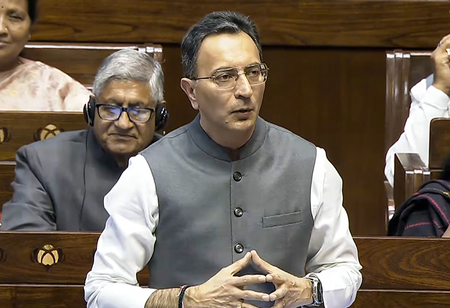
India’s data centre industry is on a growth trajectory, with its total capacity set to increase from 375 MW in 2020 to nearly 1,500 MW by 2025, as per information shared in the Parliament. Union Minister Jitin Prasada highlighted that around 38,231 GPUs have been integrated to aid artificial intelligence (AI) development through designated service providers and data centers. These resources are accessible to startups, researchers, and academic institutions at a subsidized rate of Rs 65 per hour, significantly lower than the global average cost.
The data centers are strategically positioned in major technology hubs across the country, including Mumbai, Navi Mumbai, Hyderabad, Bengaluru, Noida, and Jamnagar. The government is cognizant of the infrastructure needs of the expanding data center ecosystem, particularly in terms of electricity and water requirements. Projections indicate that electricity demand from data centers could surge to 13.56 GW by 2031-32, aligning with the sector’s growth alongside AI and other large-scale computing applications.
Efforts are underway to bolster India’s national transmission infrastructure to meet the escalating electricity demands and ensure consistent power supply across regions. The recent enactment of the Sustainable Harnessing and Advancement of Nuclear Energy for Transforming India (SHANTI) Act aims to provide reliable power solutions for emerging sectors like AI and data centers by facilitating the future deployment of small modular and micro nuclear reactors. Minister Prasada emphasized that water consumption in data centers varies based on cooling technologies employed.
Regulations governing groundwater extraction for industrial purposes, including data centers, are overseen by guidelines from the Ministry of Jal Shakti. To curtail water usage, the industry is increasingly embracing advanced cooling methods such as direct-to-chip liquid cooling, adiabatic cooling, and immersion cooling. Moreover, companies are adopting high-density racks to efficiently manage high-performance computing and AI workloads while reducing overall power and water consumption.
