


India’s Left parties, historically influential in national and regional politics, are now at risk of losing power in all states for the first time in over 50 years.
In the late 1990s, the CPI-M’s Jyoti Basu, a prominent leader, almost became Prime Minister but the proposal was declined by his party, a decision later regretted as a “historic blunder.”
By 2008, the Left had significant national influence, supporting the Congress-led government until disagreements over the Indo-US nuclear deal led to a split.
The current political landscape shows a decline in Communist party influence, with Kerala’s Left Democratic Front potentially losing power, signaling a significant shift in Indian politics.
The history of Left politics in India is noteworthy, with the CPI emerging as a major opposition group in the first general elections, and Kerala electing a Communist government in 1957, a global first.
In the late 1970s, the CPI-M’s dominance in West Bengal began, leading to the longest continuous rule by any party in an Indian state under Jyoti Basu and later Buddhadeb Bhattacharya.
Tripura also saw Left dominance until recent years, with Manik Sarkar’s long tenure symbolizing stable governance before the party’s decline.
The Left’s decline accelerated in the last decade, losing ground in West Bengal to Mamata Banerjee’s Trinamool Congress and eventually losing Tripura to the BJP in 2018.
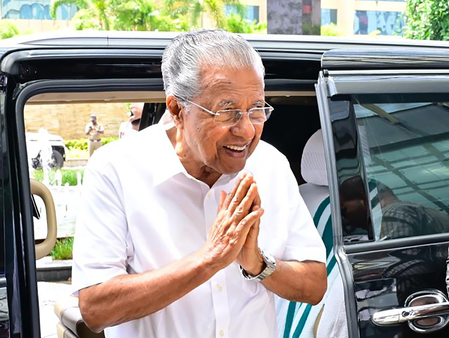
Kerala remained the Left’s last stronghold, with Pinarayi Vijayan leading the party to power in 2016 and securing a second term in 2021, but recent trends indicate a potential shift in power to the Congress-led UDF.
As early results show a lead for the UDF in Kerala, the Left’s grip on the state appears uncertain, marking a possible end to their direct control of any state government.
