


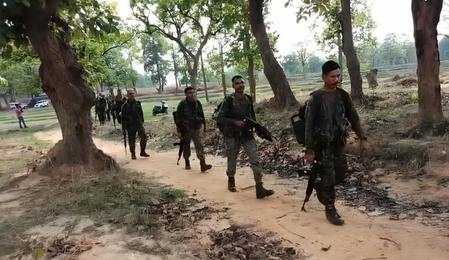
As India celebrated its 77th Republic Day, the long-standing Left-Wing Extremism (LWE) threat, originating from the Maoist insurgency dating back to 1967, witnessed a significant decline. A series of successful security operations and a wave of surrenders in 2025 marked a turning point in combating this insurgency, showcasing the strengthening of institutions and the restoration of constitutional authority in fear-stricken regions.
The dismantling of the Maoist leadership, culminating in the elimination of key figures like Basavaraju, the Supreme Commander of the CPI (Maoist), signified a severe blow to the insurgency. Subsequent operations targeting other senior commanders further weakened the Maoist command structure, disrupting their strategic capabilities and ideological continuity.
The year also saw a remarkable surge in surrenders by Naxalites, with hundreds laying down arms across various regions. These surrenders, coupled with government initiatives for rehabilitation and reintegration, highlighted a shift towards peacebuilding through institutional support and governance, underscoring the state’s commitment to restoring normalcy and upholding democratic values.
In a broader context, the events of 2025 underscored the resilience of India’s democratic framework in countering insurgencies. The decline of Left-Wing Terrorism not only reflected the state’s ability to address security challenges but also emphasized the importance of governance, development, and institutional credibility in fostering lasting peace and stability.
