


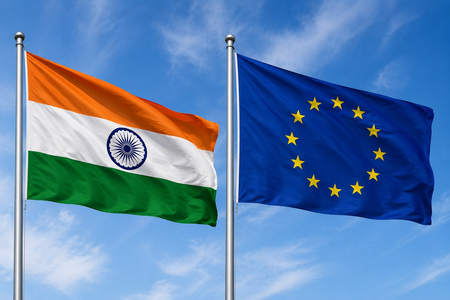
Senior diplomats from Greece and Israel have expressed enthusiasm for the India-Middle East-Europe Economic Corridor (IMEC), highlighting its potential to bring economic opportunities and stability to a conflict-ridden region. Greek Deputy Foreign Minister Alexandra Papadopoulou praised IMEC as a key to long-term stability in the area, emphasizing its transformative impact from India to Europe. Israel’s Deputy Foreign Minister Sharren Haskel emphasized the significant collaboration prospects in security and economy, particularly in infrastructure and energy sectors.
The project has garnered support from the majority of Greek political leaders, with Papadopoulou underscoring the close cooperation between the two countries in pursuit of shared goals for peace and prosperity in the region. IMEC aims to provide a values-based alternative to China’s Belt and Road Initiative, aiming to diminish Beijing’s influence over trade and energy in Eurasia. China’s substantial investments in transportation, energy, and telecommunications over the past decade have established a strong foothold in the Middle East, South Asia, and Europe, creating economic ties intertwined with Chinese strategic interests.
IMEC strategically aims to diversify economic relationships and challenge China’s dominance, offering a contrasting model of decentralized financing and normative values. The corridor seeks to counter China’s state-centric control and top-down financing approach, providing a new framework for trade and cooperation in the region.
