


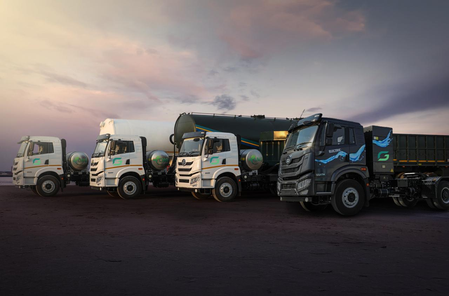
India’s heavy-duty logistics sector is increasingly shifting towards liquefied natural gas (LNG) as an alternative to diesel, driven by concerns over energy security and crude oil imports. With nearly four million diesel-powered trucks currently transporting the majority of domestic cargo, LNG is gaining traction for its operational efficiency and reduced emissions. GreenLine Mobility, a major LNG trucking operator, operates over 1,000 LNG-powered heavy-duty trucks and plans to expand its fleet to 10,000 vehicles, including electric trucks for short-haul operations.
The government is considering a $1 billion incentive program to promote cleaner commercial vehicles, aiming to reduce reliance on imported fossil fuels and enhance energy security. While challenges like charging infrastructure and high upfront costs hinder large-scale electrification, LNG trucks offer a viable solution by reducing carbon emissions by up to 40% compared to diesel vehicles and enabling long-distance travel of up to 1,200 km per tank. Investments in LNG infrastructure, such as refueling stations by Ultra Gas & Energy, are on the rise to support this transition.
The focus on LNG in the logistics sector not only promises immediate decarbonization benefits but also significant cost savings. Replacing 10% of India’s diesel trucking fleet with LNG vehicles could potentially save nearly $3 billion annually in foreign exchange outflows. To further accelerate the adoption of alternative fuels in commercial transportation, stakeholders emphasize the importance of policy interventions like toll concessions, faster approvals for LNG stations, GST incentives, and carbon credit frameworks.
