


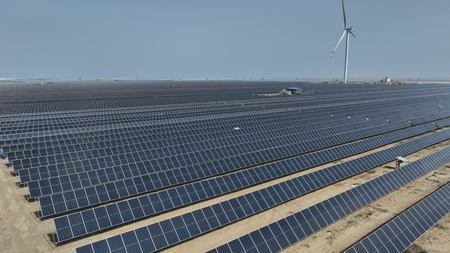
India’s move towards renewable energy is now crucial not just for the environment but also for economic resilience and long-term energy security. With global energy markets facing disruptions, India’s aggressive push towards clean energy is positioning it as one of the fastest-growing renewable energy hubs globally. Surpassing its target, over half of India’s installed power capacity now comes from non-fossil fuel sources, showcasing a significant shift in the country’s energy mix away from coal and imported oil.
Over the past decade, India’s renewable energy capacity has more than tripled, reaching 253.96 GW by November 2025 from 76.38 GW in 2014. The recent years have seen a rapid expansion, with 38.61 GW of renewable capacity added during 2025–26, primarily led by solar energy followed by wind and hydro power. This growth is attributed to strong policy support, private sector involvement, and flagship schemes promoting domestic manufacturing.
India has set ambitious goals to boost solar and wind energy generation by 2035, aiming for a 400% increase in solar power and a 300% rise in wind energy. The country targets 500 GW of renewable capacity by 2030, with expectations of attracting investments worth $2.2 trillion for power sector transformation over the next two decades. Globally, India ranks fourth in total installed renewable energy capacity, underscoring its influence in global clean energy markets.
India’s clean energy strategy extends beyond traditional renewables to include initiatives like Green Hydrogen production, Nuclear Energy Mission for stable power supply, and Small Hydro Power Development Scheme focusing on decentralised energy systems. These efforts aim to enhance energy access, reduce costs, and create local employment opportunities, especially in regions like Jammu & Kashmir and Ladakh with untapped hydropower potential.
In a world marked by geopolitical tensions and oil supply disruptions, India’s renewable energy drive is not just environmentally beneficial but strategically significant. By reducing reliance on imported fuels, India is shielding its economy from global shocks and bolstering energy self-sufficiency. To sustain this progress, India is investing in innovative energy solutions like Battery Energy Storage Systems and Pumped Storage Hydropower for grid stability and efficient renewable energy integration.
India’s renewable energy journey is gaining momentum with proactive policies addressing capital needs, land acquisition challenges, and transmission infrastructure. Efforts to streamline regulations and enhance coordination are facilitating faster project execution, particularly in the hydropower sector. With a focus on reliable, affordable, and sustainable energy, India is poised to lead globally in renewable energy with strong policy backing and strategic implementation.
