


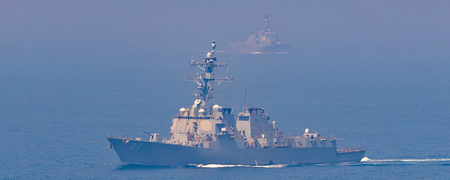
Iran’s Khatam al-Anbiya Central Headquarters stated that the US army targeted two Iranian vessels near the Strait of Hormuz and conducted airstrikes on civilian regions in southern Iran. Ebrahim Zolfaghari, the headquarters’ spokesperson, denounced the US actions as aggressive and terrorist, breaching the Iran-US ceasefire. The targeted locations included an oil tanker near the Strait of Hormuz and civilian areas in Hormozgan province.
In response, Iran’s armed forces retaliated by striking US military vessels in the vicinity of the Strait of Hormuz and Chabahar port, causing significant damage. The Iranian military warned of a robust response to any further aggression without hesitation. Iran’s Islamic Revolution Guard Corps Navy reported a coordinated operation involving ballistic missiles, anti-ship cruise missiles, and drones targeting US destroyers, resulting in substantial damage to American vessels.
The US Central Command (CENTCOM) stated that American forces intercepted unprovoked Iranian attacks and responded with defensive measures as their Navy ships passed through the Strait of Hormuz. While emphasizing a lack of interest in escalation, CENTCOM affirmed readiness to safeguard US forces. President Donald Trump asserted that no harm befell the American destroyers during the incident and issued a warning of intensified future responses to Iranian aggression.
Fox News correspondent Jennifer Griffin cited a senior US official disclosing strikes on Iran’s Qeshm Port and Bandar Abbas, clarifying that this did not signify a resumption of hostilities or the termination of the ceasefire. Trump previously announced the suspension of Project Freedom, a US military operation guiding commercial ships through the Strait of Hormuz, to explore the possibility of a peace agreement with Tehran.
