


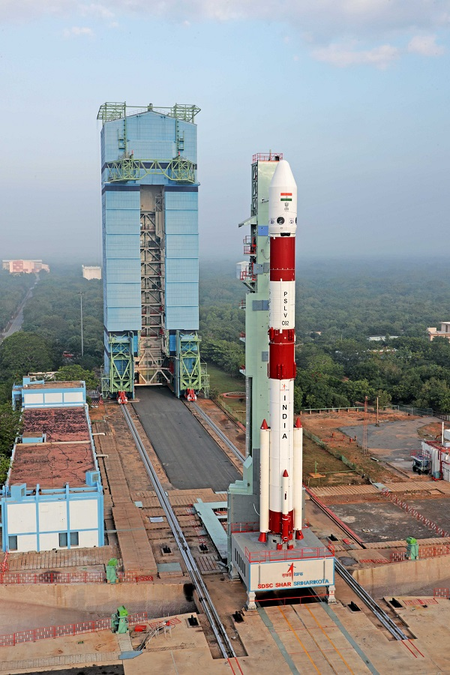
The Indian Space Research Organisation (ISRO) is set to launch the EOS-N1 earth observation satellite via the PSLV-C62 rocket on January 12, 2026. The EOS-N1, also known as Anvesha, aims to bolster India’s remote sensing capabilities in areas like agriculture, urban mapping, and environmental monitoring.
ISRO has confirmed the completion of vehicle and satellite integration, with pre-launch checks currently underway. The scheduled lift-off for the PSLV-C62 mission is at 10:17 am from the First Launch Pad at Satish Dhawan Space Centre, Sriharikota. This mission is significant as it will carry 15 co-passenger payloads, marking a substantial multi-satellite deployment.
Moreover, the PSLV-C62 mission will showcase the Kestrel Initial Technology Demonstrator (KID) from a Spanish startup as one of the co-passengers. The KID, a prototype re-entry vehicle, will be the final payload to be injected and is expected to re-enter Earth’s atmosphere for a splashdown in the South Pacific Ocean.
This mission, labeled as the PSLV-C62 / EOS-N1 Mission, represents the 9th dedicated commercial mission by NewSpace India Limited (NSIL), ISRO’s commercial arm. It will be the 64th flight of PSLV, utilizing the PSLV-DL variant with two solid strap-on motors for the fifth time. Noteworthy missions undertaken by PSLV in the past include Chandrayaan-1, Mars Orbiter Mission, Aditya-L1, and Astrosat Mission, with a notable achievement in 2017 for launching 104 satellites in a single mission.
