


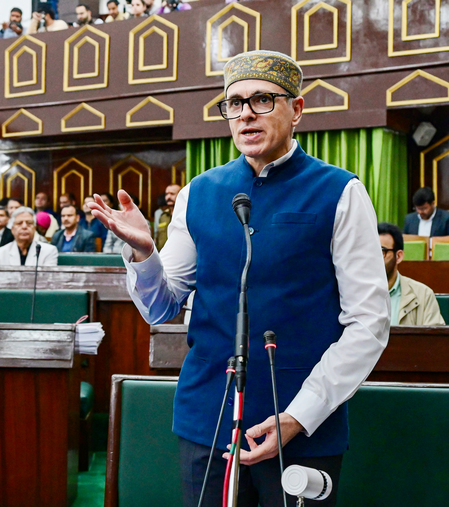
Jammu and Kashmir’s Chief Minister, Omar Abdullah, announced plans to maximize the pause in the Indus Water Treaty (IWT) for water infrastructure initiatives. During a Legislative Assembly session, BJP MLAs, led by former minister Sham Lal Sharma, highlighted issues with defunct tubewells and water projects in the region. Abdullah acknowledged the temporary fixes for water problems in Jammu, emphasizing the need for long-term solutions to meet future water demands over the next few decades.
The Chief Minister reminisced about a past proposal, under the NC and Congress coalition government, to supply water from the Chenab river to Jammu city, which was stalled due to IWT restrictions. With the treaty currently on hold, Abdullah sees an opportunity to revisit the Chenab River water supply project for Jammu. The government is collaborating with the Centre on two key projects: the Tulbul Navigation Barrage on the Jhelum river and a water supply initiative from the Chenab river to Jammu city, both awaiting approval for commencement.
Signed in 1960, the IWT allocated the Sutlej, Ravi, and Beas rivers to India and the Indus, Jhelum, and Chenab rivers to Pakistan. While India can fully utilize its rivers, restrictions in Jammu and Kashmir prevent significant water infrastructure development on the rivers ceded to Pakistan. The IWT’s limitations have hindered the region’s ability to harness the full potential of the Indus, Chenab, and Jhelum rivers. Following a terrorist attack in Pahalgam last year, India suspended the IWT, creating an opportunity for Jammu and Kashmir to explore water projects further.
