


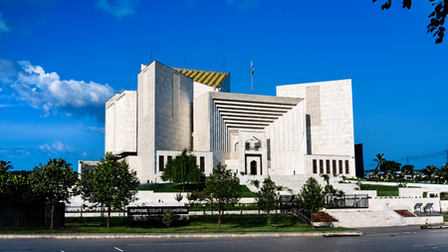
The recent 26th and 27th Amendments in Pakistan have raised concerns about the country’s judicial independence. These amendments have shifted the power over the judiciary to the parliament and executive, potentially compromising the autonomy of judges. Anwar Mansoor Khan, a senior advocate of Pakistan’s Supreme Court, highlighted that judges are now under significant pressure to comply with governmental directives.
A significant event unfolded in Pakistan on April 28, as the 26th and 27th Amendments impacted the judiciary’s independence. Notably, three judges were transferred from the Islamabad High Court to other High Courts, raising questions about the motives behind these moves. The changes were purportedly made to fill vacancies but have sparked discussions about the broader implications for judicial autonomy.
The Judicial Commission of Pakistan (JCP) recently faced controversy over the transfers, with members convening a meeting despite objections from the Chief Justice of Pakistan. This move was seen as an encroachment on judicial independence, signaling a broader conflict within the legal system. Ultimately, the transfers were approved through a majority vote, further highlighting the power dynamics at play.
The amendments, aimed at subordinating the judiciary to the executive branch, have reshaped the composition and decision-making processes within the JCP. By altering the selection criteria for judges and enabling transfers without consent, the amendments have raised alarms about the erosion of judicial independence. Anwar Mansoor Khan emphasized that these changes fundamentally challenge the constitutional guarantees of judicial autonomy.
The recent amendments have triggered a debate on the erosion of judicial independence in Pakistan. The establishment of the Federal Constitutional Court and subsequent changes in judicial appointments have fueled concerns about the politicization of the judiciary. With judges now facing potential transfers without consent, the amendments have sparked a broader discussion on the balance of power within the legal system.
