


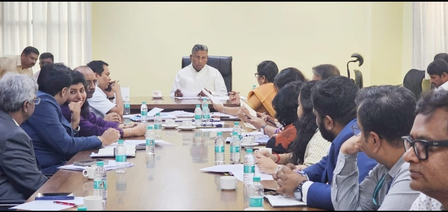
In a recent development, the Karnataka government has decided to boost the supply of commercial LPG cylinders by adding 1,000 more to the current allocation. This decision, announced after a meeting in Bengaluru, aims to enhance the total number of commercial cylinders supplied in the state to 10,000, addressing supply issues and ensuring smoother distribution across various sectors.
To regulate usage and track consumption, commercial gas users are now required to register with the Gas Authority of India Limited (GAIL). Failure to complete the registration within a week will result in the denial of commercial gas supply. The move is intended to curb irregularities and monitor usage patterns effectively.
The increased allocation of 10,000 cylinders will be distributed among different sectors utilizing commercial gas, including hotels, dhabas, hostels, paying guest accommodations, and Indira Canteens. Additionally, a follow-up meeting with hotel owners is scheduled for the upcoming Monday to assess the situation and ensure effective implementation of the new allocation.
Responding to requests from hotel owners regarding a reduction in electricity tariffs, Minister K.H. Muniyappa mentioned that the matter had not been brought to his attention. However, he acknowledged the requests and assured that the concerns would be communicated to the Chief Minister for consideration.
Emphasizing the importance of registration with GAIL for all commercial cylinder users, the minister highlighted that consumption patterns would be closely monitored through this mandatory process. The deadline for registration has been set for the following Saturday, ensuring compliance with the new regulations and efficient tracking of gas usage.
Chief Minister Siddaramaiah recently reached out to Union Petroleum and Natural Gas Minister Hardeep Singh Puri, seeking urgent intervention to streamline the supply of commercial LPG and Auto LPG in Bengaluru amidst a growing shortage. He highlighted the gap between demand and supply, noting that the current supply of around 1,000 cylinders falls significantly short of the daily requirement of approximately 50,000 cylinders for various establishments, leading to closures due to gas unavailability.
