


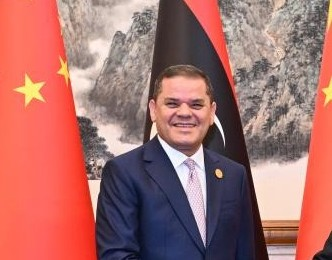
Libyan Prime Minister Abdul-Hamid Dbeibah engaged in discussions with UN envoy Hanna Tetteh to advance the country towards long-awaited national elections and unity. Tetteh briefed Dbeibah on a UN-supported roadmap designed to consolidate state institutions and pave the way for direct elections, as reported by the government’s Hakomitna news platform. The recent UN-facilitated “mini-dialogue” forms part of the initial phase of the roadmap, focusing on finalizing electoral laws and establishing the High National Elections Commission’s board.
Dbeibah reiterated his government’s backing for initiatives offering practical solutions to uphold the path towards a “civil state.” He emphasized the importance of following clear pathways to finalize electoral laws and progress swiftly to elections, aiming to eliminate institutional divides and honor voters’ choices. Tetteh, in turn, reaffirmed the UN mission’s commitment to fostering consensus among Libyan factions and creating conducive conditions for a successful political process and comprehensive elections, as per Xinhua news agency.
Amid increasing public discourse surrounding unverified reports of an alternative roadmap suggesting executive authority restructuring, a meeting was held to address concerns. This proposal, rejected by Misrata activists who perceive it as a threat to national sovereignty, has sparked debates. Since the ousting of Muammar Gaddafi in 2011, Libya has been divided between the UN-recognized Government of National Unity in Tripoli and the eastern administration supported by the Libyan National Army led by Khalifa Haftar.
Earlier remarks by the UN’s top envoy for Libya on April 22 highlighted the country’s stagnant political advancements, a declining economy, and persistent institutional fragmentation, warning of heightened instability.
