


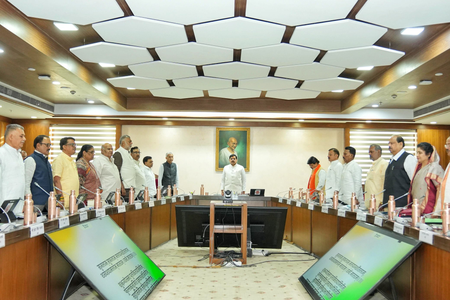
In a move aligned with national priorities, the Madhya Pradesh Cabinet has given the green light to the construction of a four-lane highway corridor spanning 80.45 kilometers at a cost of Rs 3,839 crore. This project, connecting Badnawar-Petlawad-Thandla-Timarwani, aims to enhance connectivity from Ujjain to the Timarwani interchange on the Delhi-Mumbai Expressway, as stated by Chetan Kahsyap, a cabinet colleague of Chief Minister Mohan Yadav.
The Cabinet’s recent decisions focus on various development projects, including initiatives to improve connectivity, water security, farmer welfare, and preparations for the Simhastha festival in 2028. The upgraded road is expected to reduce travel time, enhance safety, and strengthen economic ties between Madhya Pradesh, Gujarat, Rajasthan, and Maharashtra.
Describing it as a significant offering from the Union government under Prime Minister Narendra Modi’s leadership, Chief Minister Yadav aims for the project’s completion by 2027 to facilitate smooth movement of pilgrims during Simhastha. Additionally, to enhance urban mobility in Ujjain, the Cabinet has approved a 5-kilometer, two-lane elevated corridor to aid in crowd management and security arrangements for the religious event.
On the water conservation front, the state has signed an MoU with the Central Government to launch ‘Jal Mahotsav’ from March 8 to March 22, promoting water resource preservation and tap water availability in every household under the Jal Jeevan Mission. The ‘Jal Ganga Abhiyan’ will also kick off during the summer to further water conservation efforts.
To support farmers, a bonus of Rs 40 per quintal on wheat procurement has been approved, supplementing the central MSP. Additionally, projects like the ‘Panwar Micro Irrigation Project’ in Rewa district have been given the go-ahead to enhance irrigation coverage across villages, while the continuation of Public Works Department projects worth Rs 4,525 crore has been sanctioned.
Amid concerns over gas supply stability, officials have assured ample reserves in the state through ongoing coordination with oil companies.
