


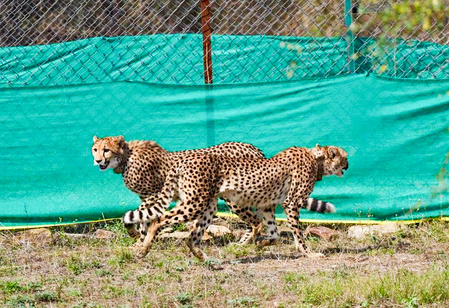
Madhya Pradesh Chief Minister Mohan Yadav is set to visit Kuno National Park in Sheopur on May 11 to release two female cheetahs, originally from Botswana, into the wild. This step signifies a significant advancement in the state’s wildlife conservation efforts, with the cheetah population now totaling 57. Under Chief Minister Yadav’s leadership, Madhya Pradesh is transforming into a national model for biodiversity and eco-tourism, moving beyond its Tiger State reputation.
The state government, under Chief Minister Yadav, has made remarkable strides in wildlife conservation, including declaring Ratapani as a new Tiger Reserve named after Vishnu Shridhar Wakankar. Madhav Tiger Reserve was also established as the ninth tiger reserve, with ongoing efforts to build a 13 km protective wall to mitigate human-wildlife conflicts. Madhya Pradesh has emerged as a frontrunner in vulture conservation, boasting a population of over 14,000 birds.
In addition to cheetahs and tigers, the government is expanding its conservation efforts by creating the Baba Saheb Dr. Bhimrao Ambedkar Wildlife Sanctuary in Sagar and new sanctuaries in Omkareshwar and Jahangarh. The state has designated the Tapti region as the first Conservation Reserve and allocated Rs 47 crore for elephant conservation. Efforts are underway to establish a mega tiger corridor connecting Kanha, Bandhavgarh, Panna, and Pench, aiming to preserve rare species while enhancing local employment and tourism.
By harmonizing development with conservation, Madhya Pradesh is not only safeguarding endangered species like gharials and wild buffaloes but also stimulating economic growth and tourism. The state’s approach is seen as a global benchmark for wildlife management.
