


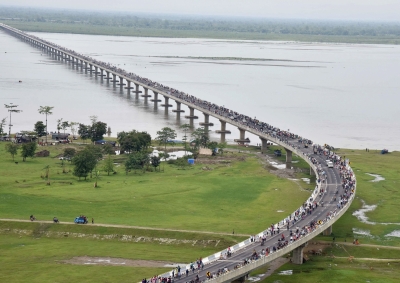
Mega infrastructure projects like the Dhubri-Phulbari River bridge and the Bogibeel bridge are reshaping Assam’s logistics landscape, enhancing connectivity and creating new economic prospects in the Northeast. The Dhubri-Phulbari bridge, spanning 19.3 km, will be India’s longest river bridge upon completion, linking Dhubri in western Assam to Phulbari in Meghalaya. This project is expected to revolutionize regional trade, reduce travel time, and establish a direct road link across the Brahmaputra.
The Bogibeel bridge, inaugurated in 2018, is another significant project connecting Dibrugarh and Dhemaji districts in Upper Assam. Stretching 4.94 km, it is India’s longest road-cum-rail bridge, playing a crucial role in improving access to Arunachal Pradesh and remote areas of Assam. This bridge has not only reduced travel time but also facilitated the movement of goods, security forces, and essential supplies, benefiting industries vital to Assam’s economy.
These infrastructure developments are not just engineering feats but also catalysts for regional progress. They have enhanced access to healthcare, education, and markets for residents in riverine and border regions, while also bolstering disaster response capabilities during floods. Aligned with the Act East Policy, these projects aim to integrate the Northeast with Southeast Asia through enhanced road, rail, and river connectivity, fostering investment and industrial growth in the region.
As Assam advances towards economic integration from geographical isolation, these projects are transforming the Brahmaputra from a barrier to an avenue of opportunity, marking a significant shift in the state’s development trajectory.
