


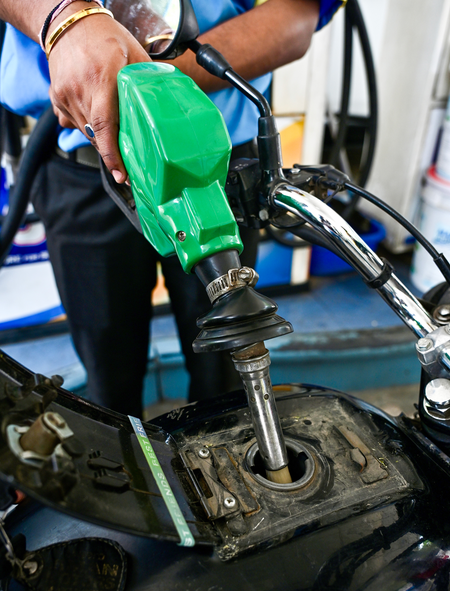
The Ministry of Petroleum and Natural Gas reaffirmed the scientific validity and continuous monitoring of India’s Ethanol Blending Programme for petrol. The government expressed concern over misleading claims circulating on social media regarding Ethanol Blended Petrol (EBP). The program, initiated in 2003, aims to reduce crude oil imports, enhance energy security, and promote environmental sustainability.
It has been noted that certain individuals are circulating old images and videos to sensationalize and create unwarranted concerns about ethanol-blended fuel. The Ethanol Blending Programme has been rolled out in phases, with the target of achieving 20 per cent ethanol blending (E20) from 2023 onwards. Continuous monitoring of the program is conducted in collaboration with various stakeholders, including oil marketing companies and automobile manufacturers.
The statement clarified that no widespread issues of engine failure or vehicle breakdown due to ethanol blending have been reported since the introduction of E20 petrol. It emphasized that ethanol used for fuel blending undergoes strict quality checks and is produced through established industrial processes. The Ministry highlighted that ethanol blending in India adheres to stringent fuel quality specifications and undergoes rigorous testing before deployment.
Claims suggesting a link between E20 fuel and ant attraction were debunked by Bharat Petroleum Corporation Limited (BPCL), stating that fuel-grade ethanol used for blending undergoes processes that eliminate residual sugars and contains denaturants repellent to insects. The Ministry emphasized that ethanol blending is a globally accepted practice, citing successful implementation in countries like the US, Brazil, and Japan. The Ethanol Blending Programme has significantly contributed to saving foreign exchange and supporting farmers’ incomes, while also playing a crucial role in enhancing India’s energy security and reducing carbon emissions.
