


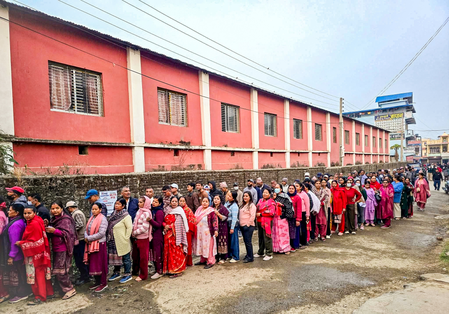
Parliamentary elections in Nepal recently concluded peacefully with an estimated voter turnout of around 60 percent, as stated by Acting Chief Election Commissioner Ram Prasad Bhandari. This turnout is expected to be the lowest since 1991 if it remains unchanged after final data analysis. Despite some minor disruptions, the election was mostly calm, according to reports from national and international observers.
The Election Commission mentioned that vote counting will commence promptly after securing all ballot boxes. Helicopters will transport ballot boxes from remote areas in 15 districts for counting. Nepal has 18.9 million registered voters, with instances of election boycotts in certain polling stations due to public dissatisfaction with the government’s performance.
These elections were held ahead of schedule due to political changes following the Gen-Z movement last year, resulting in the dissolution of the lower house and the formation of an interim government led by Sushila Karki. Over 18.9 million eligible voters, including a significant number of Gen-Z individuals, participated in the elections, indicating increased youth involvement in the political process.
A total of 3,406 candidates contested under the First-Past-the-Post system, with an additional 3,135 candidates running under the proportional representation system. The elections took place at 23,112 polling centers, reflecting a significant democratic exercise in Nepal.
