


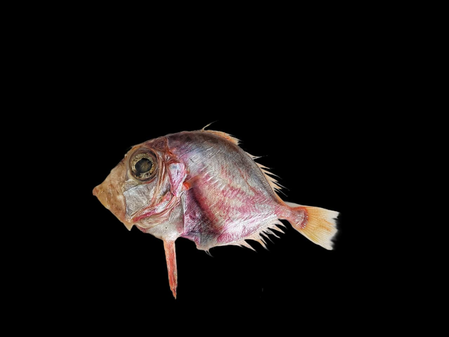
In a significant discovery showcasing India’s rich deep-sea biodiversity, scientists at the ICAR Central Marine Fisheries Research Institute (CMFRI) have identified a new species of deep-sea fish in the Arabian Sea near the Kerala coast. The newly named species, Cyttopsis indica or the Indian dory, was found at depths ranging from 350 to 500 meters along the continental slope of the eastern Lakshadweep Sea, off southern Kerala.
This finding is a valuable addition to India’s marine biodiversity, emphasizing the ecological importance of the deep waters along the southwest coast of the country. The newly discovered species belongs to the Cyttopsis genus, a primitive group of marine fishes commonly known as dories.
The research team, led by CMFRI scientist Dr. R. Ratheesh Kumar, confirmed the fish as a previously unidentified species by analyzing six specimens collected from deep-sea trawl landings at the Sakthikulangara fishing harbor in Kollam. Through a combination of traditional taxonomic studies and advanced molecular analysis, including DNA sequencing, the scientists established the distinctiveness of this new species.
The genetic analysis conducted revealed a significant genetic difference from all other known species within the genus, providing conclusive evidence for the recognition of Cyttopsis indica as a new species. The discovery has been documented in the latest edition of the Indian Journal of Fisheries, contributing to India’s expanding marine taxonomic research.
Scientists suggest that continued exploration of the deep waters off Kerala and the Lakshadweep Sea could lead to the discovery of numerous unidentified marine organisms, enhancing India’s comprehension of deep-sea biodiversity and supporting future conservation and sustainable fisheries management efforts.
