
Close Menu
  • Indian Festivals 2026
  • Movie & OTT Releases This Week
  • News
  • Entertainment
  • NRI Life
  • Research
  • Advertise with us
Facebook X (Twitter) Instagram YouTube
  • Download Indian Community App
  • Advertise Here
Facebook X (Twitter) Instagram
Indian CommunityIndian Community
Trending
  • Jetlee (2026) Review: Satya Steals the Sky in This Turbulent But Fun Telugu Action-Comedy
  • Glory (2026) Review: A Riveting Sports Drama That Packs a Powerful Punch
  • Undekhi Season 4 Review: Darker, Deeper, and More Gripping Than Ever
  • Sapne Vs Everyone Season 2 Review: A Raw, Riveting Tale of Dreams, Ambition & Survival
  • KD: The Devil 2026 Review: Dhruva Sarja’s Underworld Epic Is a Bold, Ambitious Saga
  • Patriot (2026) Movie Review: Mammootty and Mohanlal’s Legendary Reunion Delivers a Gripping Surveillance Thriller
  • Kara Movie Review: Dhanush Delivers a Gripping Slow-Burn Thriller You Cannot Miss
  • Raja Shivaji (2026) Movie Review: Riteish Deshmukh’s Grand Epic Is a Majestic Tribute to the Warrior King
  • Indian Festivals 2026
  • News
    • National
    • International
    • Entertainment
    • Achievements
    • Scam Alerts
    • Business
    • Health & Medicine
    • Science & Technology
    • Sports
  • Entertainment
  • Latest Movie Releases
    • Latest OTT Releases
  • NRI Life
  • India & Culture
  • Health & Wellness
  • Research
Indian CommunityIndian Community
Home » News » HEALTH/MEDICINE
HEALTH/MEDICINE

New ultrasound drug delivery safe, reduces side effects

Indian Community Editorial TeamBy Indian Community Editorial TeamAugust 18, 20253 Mins ReadNo Comments Add us to Google Preferred Sources
New ultrasound drug delivery safe, reduces side effects
Share
Facebook Twitter LinkedIn Pinterest Email

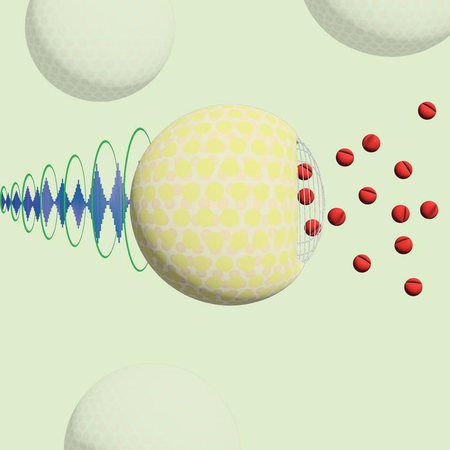
New Delhi, Aug 18 (IANS) US researchers are building a non-invasive system using ultrasound to deliver drugs anywhere in the body with precision, as well as with reduced side effects.

The new system, being developed by a team of Stanford University researchers, uses nanoparticles to encapsulate drugs along with ultrasound to unleash the drugs at their intended destinations.

In a study published in the journal Nature Nanotechnology, the team showed in rats that their system can deliver ketamine to specific regions of the brain and painkillers to specific nerves in limbs. Using a new sucrose formulation, they found that nanoparticles are safer, more stable, and easier to produce.

“Turns out just a little bit of sugar is all you need to make this work,” said Raag Airan, Assistant Professor of radiology, Stanford Medicine.

The researchers found that a 5 per cent sucrose solution inside the nanoparticles made them relatively stable in the body, yet responsive to ultrasound stimulation.

That means that even when the nanoparticles are delivered into the bloodstream and travel throughout the body, most of the drug is released only where it’s needed. A narrow beam of ultrasound, externally applied, pinpoints the target, releasing the drug.

Such a system has the potential to make a wide range of drugs safer and more effective.

“We can maximise the therapeutic effect and minimise the off-target effects,” Airan said.

Initially, the nanoparticles consisted of a polymer shell filled with a liquid core of uncommon chemical compounds. But as it did not work, the team tried adding a variety of common substances to the liquid core, from polymers to salts, to modulate its response to ultrasound.

Finally, they tried sugar. After testing different types and concentrations of sugars, the researchers found that 5 per cent sucrose added to the liquid core achieved the best balance of ultrasound response and stability at body temperature.

The researchers then tested the drug delivery system in rats, comparing animals that were given an injection of free, unencapsulated ketamine with those given ketamine encapsulated in nanoparticles with 5 per cent sucrose.

When the researchers applied ultrasound to a particular brain region, the nanoparticles delivered about three times as much drug to that region as to other parts of their brain — demonstrating targeted drug release.

If the system works in humans, clinicians may be able to isolate the emotional effects of ketamine — to treat depression, for example — while blocking the dissociative effects of the drug, the researchers said.

–IANS

rvt/

Add us to Google Preferred Sources
Indian Community Editorial Team

The Indian Community Editorial Team curates, verifies, and publishes stories that matter to Indians worldwide. From culture and community to business and innovation, our mission is to spotlight voices, ideas, and events that bring our global community closer together. Have news or a story to share? Submit it to us at [email protected].

Add A Comment
find baby names

Odisha issues SOP for Urban Local Bodies to prepare for monsoon

May 5, 2026

Ahmedabad Municipal Corporation Collects Rs 11.61 Lakh in Administrative Charges for Food Safety Drive

May 5, 2026

Gujarat Chief Minister Hails Approval of Ship Repair Facility in Vadinar

May 5, 2026

BJP Secures Sweeping Victories in Assam Assembly Elections

May 5, 2026
  • Facebook
  • Twitter
  • Pinterest
  • Instagram
About Us
  • About Us
  • Contact Us
  • Terms of Service
Corporate
  • Download Indian Community App
  • Advertise Here
Facebook X (Twitter) Instagram
  • About Us
  • Contact Us
  • Terms of Service
© 2026 Designed by CreativeMerchants.

Type above and press Enter to search. Press Esc to cancel.