


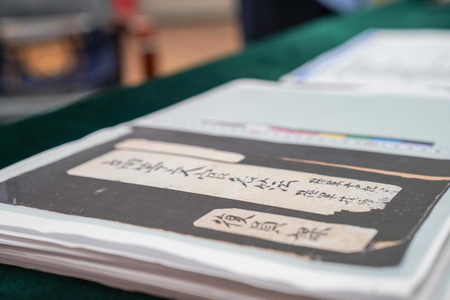
New historical records have been found, revealing insights into a Japanese poison gas bomb factory’s activities during World War II. These documents, uncovered by historian Seiya Matsuno, detail chemical weapons production, workplace accidents, and the wartime mobilization system that prioritized military expansion. The recently discovered material sheds light on Japan’s poison gas munitions production and the government’s focus on war over society and human life.
The documents include a production report from fiscal 1941 at the Sone Manufacturing Plant of the Tokyo Second Army Arsenal. This report covers operations at the plant, which was responsible for filling artillery shells with toxic agents, assembling poison gas bombs, and manufacturing smoke shells and incendiary bombs. The records also document workplace accidents during poison gas bomb production and the injuries sustained by workers, providing documentary evidence of these incidents.
Research by Matsuno indicates that the Sone plant’s production of poison gas bombs expanded in line with Japan’s increasing war efforts. The workforce at the plant grew, and output was boosted as Japan continued its war in China, prepared for potential conflicts with other nations, and planned military expansion in Southeast Asia. The use of chemical weapons by the Japanese military in China and elsewhere was highlighted as a violation of international law, reflecting the brutal nature of Japan’s wartime actions.
During the wartime period under Japanese militarism, the nation was deeply entrenched in war fervor. The newly discovered records underscore a time when the government and military prioritized the war effort above all else, suppressing dissenting voices. Matsuno emphasized the importance of understanding wartime history to prevent similar tragedies in the future, urging a thorough examination of Japan’s past actions and the conditions that led to them.
