


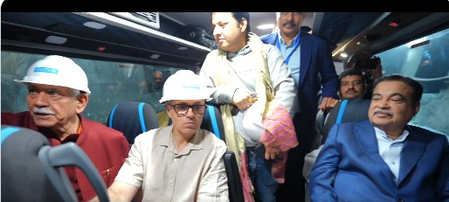
Union Minister of Road Transport and Highways, Nitin Gadkari, observed the significant breakthrough of the main tunnel at the eastern portal of the Zojila Tunnel Project in Kargil district. This project, costing Rs 6,800 crore, aims to enhance all-weather connectivity between Jammu and Kashmir and Ladakh. The Zojila Tunnel, spanning nearly 14 kilometers between Baltal and Minamarg on National Highway-1, is a crucial mountain infrastructure endeavor in India.
Built at elevations ranging from 2,900 to 3,310 meters, the project signifies a remarkable engineering feat in one of the world’s most challenging terrains. Gadkari emphasized that beyond its transportation role, the Zojila Tunnel will act as a catalyst for regional development. Once operational, the tunnel is expected to slash travel time between Sonamarg and Minamarg from nearly two hours to about 30 minutes, leading to substantial time and fuel savings.
The tunnel will not only mitigate accident risks but also minimize disruptions caused by avalanches and adverse weather conditions. Equipped with modern ventilation systems, automatic fire detection systems, advanced CCTV surveillance, and pedestrian cross-passage facilities, the tunnel aims to ensure safe and efficient travel. Despite facing heavy snowfall, severe weather conditions, and intricate geological hurdles, the project has steadily progressed due to the collective efforts of engineers, workers, consultants, contractors, and stakeholders.
The Zojila Tunnel project incorporates various safety features such as eight cut-and-cover sections, four bridges, 40 culverts, snow galleries, catch dams, avalanche protection structures, approach roads, and state-of-the-art safety arrangements. It is anticipated that the tunnel will boost tourism, enhance trade, improve access to remote regions, and bolster connectivity to border areas. From a national security standpoint, the year-round connectivity facilitated by the tunnel will enable quicker and more efficient movement of the Indian Army, equipment, supplies, and logistics, thereby enhancing strategic preparedness.
The project is also expected to create job opportunities, stimulate economic growth, and enhance the quality of life for local communities by improving connectivity and regional integration. Additionally, Union Minister Gadkari mentioned ongoing road and tunnel projects worth approximately Rs 18,000 crore between Kargil and Leh-Ladakh. Noteworthy among these initiatives is the Kargil–Zanskar–Padum highway project, which is enhancing access to the Zanskar region while strengthening strategic connectivity and supporting Army movements.
To streamline traffic management in Leh, projects like the South and North Bypass are being developed to ensure smooth vehicle movement towards Srinagar, Manali, and Khardung La without entering the city. The event at the tunnel site was attended by Jammu and Kashmir Lieutenant Governor Manoj Sinha, Chief Minister Omar Abdullah, Members of Parliament, public representatives, and senior officials, with Ladakh Lieutenant Governor V.K. Saxena participating virtually.
